
A joint replacement pioneer has left us.
In Memoriam: Frank Gunston, M.D.
2 min read Premium comments
Remembrances
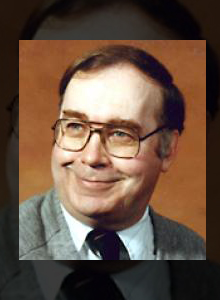
Frank Gunston, M.D., renown for creating the first artificial replacement knee, has passed away at the age of 82. The Manitoba orthopedic surgeon, who was born in Flin Flon, Manitoba, but lived in Brandon, died on February 15, 2016.
Dr. Gunston is survived by Sharleen, his wife of 47 years, his children John of Brandon and Jennifer of Winnipeg, sisters Joan (Seaforth) Lyle of Naples, Florida and Judy (Terrence) Grandstaff of Virginia Beach, Virginia, his extended family and friends.
A funeral was held at Memories Chapel in Brandon on February 22, 2016.
Frank Gunston attended the University of Manitoba, and was awarded a degree in engineering in 1957, followed by a medical degree in 1963. While studying in England, he then designed and developed a revolutionary total knee prosthesis.
His contributions and achievements were many, including the McLaughlin Travelling Fellowship (Sweden and Finland, 1971-72), Assistant Professorship (Surgery, Orthopaedics) at the U of M Faculty of Medicine, active appointments at Winnipeg General Hospital, the Children’s Centre, the Manitoba Rehab Hospital, and later practice in orthopedics and joint replacement at Brandon General Hospital.
Dr. Gunston was awarded the Principal Manning Award for Innovation (1989) for the knee prosthesis, was named Distinguished Surgeon by the Canadian Orthopaedic Association (1994), received the Order of Canada (1997), and the Manitoba Medical Association Scholastic Award (1998). Following his retirement in 2000, he also received the Queen’s Golden Jubilee Medal in 2002, and the Diamond Jubilee Medal in 2012.
Dr. Gunston’s total knee prosthesis emerged in the early 1970’s. Commenting in a CBC News article (Riley Laychuk, February 23, 2016) Peter MacDonald, M.D. incoming president of the Canadian Orthopedic Association, stated, “The design has morphed into more modern designs. But certainly he opened the pathway and set the stage for the modern designs.”
Dr. Gunston moved to Brandon in 1982 and retired in 2000 after spending the later years of his career practicing in orthopedics and joint replacement at Brandon General Hospital.
Dr. MacDonald, Gibson Professor and Head Section of Orthopaedics, University of Manitoba told OTW, “I did not know him personally very well. However I was very aware of him because of his legacy and his work, plus he did come from the same center as me. He was a brilliant man who studied engineering then worked under Sir John Charnley in the UK (who designed and implanted the first low friction total hip arthroplasty that was successful). He then returned to Canada and designed the polycentric knee which was the first successful total knee design. Since he did not patent it he did not get the credit that he deserved. He was a humble man and did not care for credit or fame. He went on to move from the University of Manitoba into private practice in Brandon, Manitoba, where he finished his career. He continued in later years to try to use his total knee by manufacturing it in his garage. In later years he eventually got recognition for his tremendous contributions!”
Author
React:
Discussion
This is a fascinating development. In my practice we've seen similar outcomes with the revised protocol. The key differentiator seems to be patient selection criteria. Has anyone else noticed the correlation with BMI thresholds?
Great point. I'd push back slightly on the conclusion, the sample size in the cited study is too small to draw population-level inferences. That said, the directional signal is compelling and worth a larger RCT.
We implemented a similar approach last year. Early results are promising but we're still gathering 12-month follow-up data. Happy to share our protocol if anyone is interested.
Join the conversation
Orthopedic professionals are discussing this. Sign in and upgrade to read every comment and add your voice.