
Genes Increase Stress Fracture Susceptibility
Genes Increase Stress Fracture Susceptibility // Partial Meniscectomy Not So Great After All // and More!
6 min read Premium comments
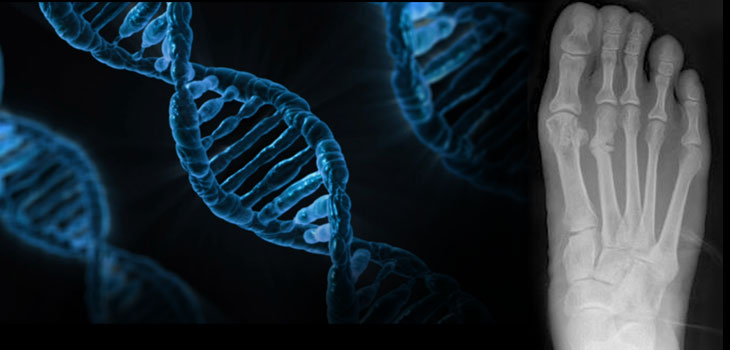
Scientists at the University of Liverpool are diving into the gene pool.
A team led by Derby Professor of Anatomy and Cell Biology James Gallagher, Ph.D., has identified how certain genes contribute to a person’s susceptibility to stress fracture injuries. Working with two groups of volunteers comprised of military recruits and elite athletes, the researchers evaluated the effect of the specific gene, P2X7R.
Dr. Gallagher told OTW, “This work started back in 1995 with a very basic scientific research project in which we found that human bone cells grown in tissue culture responded to a molecule called ATP (adenosine triphosphate) when it was added to the cultures. ATP is best known for its action inside cells so this extracellular action was a new finding in bone. Over the subsequent years we found which receptors on bone cells the ATP was targeting. One of these receptors is called P2X7R. We then found that if this receptor is missing in mice, the mouse bones don’t respond normally to mechanical loading. We also demonstrated that the receptor was involved in susceptibility to osteoporotic fracture in postmenopausal females.”
“Initially, I didn’t really envisage how our basic cell research would have such a practical impact in identifying an individual at risk of stress fractures. I think this is a very interesting example of the importance of basic research.”
“The most important message is that susceptibility to stress factors is partly determined by a person’s genes. We have shown that the P2X7R gene is important but it is not the whole story. We need to find the other genes that contribute to stress fractures. That will enable us to screen people to see if they are at risk of stress fractures and then in the case of athletes and military recruits, we will be able to devise special training programs so that susceptible individuals can avoid stress fractures. Stress fractures can ruin the careers of athletes and are responsible for a massive expense in lost training and recovery time in military training programs.”
“This research is also giving us more information about the basic mechanisms of bone healing. It’s possible in the future that these receptors will be drug targets for pharmacological intervention to promote accelerated fracture healing.”
Partial Meniscectomy No Better Than Sham Surgery?
A new Finnish study—based on findings from the Finnish Degenerative Meniscal Lesion Study (FIDELITY) Group—has found that the partial removal of a degenerative torn meniscus can’t stand up next to sham surgery when it comes to the common mechanical symptoms of catching and locking. The new study, published in the Annals of Internal Medicine, was led by Teppo Järvinen, professor of orthopaedics and traumatology at the University of Helsinki and HUCS.
Professor Järvinen told OTW, “After the primary analysis of the FIDELITY trial was published in the New England Journal of Medicine (showing that arthroscopic partial meniscectomy is no better than sham/placebo surgery in relieving knee pain and improving knee function in patients with a degenerative meniscus tear and no knee OA-osteoarthritis), our study was met with unprecedented criticism, even hostility. Please note that arthroscopic partial meniscectomy (APM) was and probably still is the most common orthopedic procedure in the U.S. and most other “western” countries (some 700, 000 such procedures are carried out annually in the U.S. alone).”
“The advocates of APM argued that APM is a highly beneficial procedure in the ‘right’ patients. Among the subgroups of patients allegedly having a favorable response to APM, those experiencing ‘mechanical symptoms’—sensations of knee catching or locking—represented the most obvious group who would benefit from APM surgery.”
“This assertion is plausible because knee catching or locking is believed to result from a mechanical blocking mechanism in the knee. The belief is that these symptoms are caused by a piece of the joint structure lodging between the articular surfaces that glide against each other. Because degenerative meniscal tears are very common pathologic alterations found at arthroscopy in the knee joints of patients with degenerative knee disease, trimming the torn meniscus should, in theory at least, improve the apparent mechanical derangement.”
“Against this background, it was actually somewhat surprising to note that no study had yet specifically tested whether APM is effective in alleviating mechanical symptoms. This is what we set out to examine in our secondary analysis of our sham-surgery controlled FIDELITY trial. And of course, it was quite surprising to also note that APM had absolutely no (beneficial) effect on these symptoms. Something that we took so [for] granted that we had not even cared to study proved completely ineffective.”
Asked about what might be especially interested for orthopedic surgeons, Professor Järvinen noted, “First, mechanistic (biological) rationales—such as the alleged link between apparent internal knee derangement and mechanical symptoms—are actually very common in medicine. However, our findings re-iterate the need to occasionally re-examine existing theories and scrutinize them closely even if they seem so obvious that it almost feels unnecessary to study them.”
“Second, it is important to note that our analyses were done post hoc as the FIDELITY trial was not originally designed to address the question of whether or not APM is effective in alleviating mechanical symptoms. Also, our results are only generalizable to knee catching and occasional locking (the ‘milder end’ of the mechanical symptom spectrum), because few patients reported other types of mechanical symptoms. Given this, I urge some caution in interpretation of our findings and strongly encourage other researchers to conduct similar, sham-surgery controlled trials designed specifically to address this question—to either corroborate or refute our findings. Having said all that, I still feel that until new evidence is published, our study is by far the best answer so far on this issue and it does not support a very common existing practice of carrying out APMs for people with a degenerative knee disease and mechanical symptoms.”
Knee Buckling Treatment Reduces Falls
Unstable knees can lead to falls, which lead to, well…a very unpleasant cascade of traumas. A new study by Michael Nevitt, Ph.D., of the University of California, San Francisco, and his colleagues, is emphasizing that healthcare practitioners must not overlook symptoms of knee instability—especially “buckling.”
Dr. Nevitt told OTW, “Falls, injury from falls and poor balance confidence are extremely common and debilitating problems in older people. Knee buckling, often described as a knee ‘giving way, ’ is a symptom of knee instability that frequently affects older individuals, in particular those with knee pain and knee osteoarthritis, and may be caused by muscle weakness and balance difficulties. If knee instability leads to frequent falls and fall-related injuries, exercises and other interventions that stabilize the knee may help maintain older individuals’ health and quality of life. To investigate this potential link, we prospectively studied 1, 842 participants in the Multicenter Osteoarthritis Study (MOST) who were an average of 67 years old at the start and who had, or were at high risk for, knee osteoarthritis (OA).”
“The present study has demonstrated for the first time that knee instability and knee buckling are important causes of falls, fall injuries and poor balance confidence in the very large segment of the older population suffering from knee pain. Even individuals who fell when a knee buckled two years previously still had a substantially increased risk of falls, injuries from falls and poor confidence in their balance two years later.”
“Pain is the predominant symptom of knee OA, and symptoms of instability such as knee buckling and falls may be overlooked by treating professionals. Fortunately, it may be possible to treat knee instability and prevent knee buckling with targeted exercises. The most important immediate impact of these findings on patient care is that health professionals should query their patients with knee OA about instability, buckling, falls and concerns about falling and work with them to take actions that may prevent buckling and falls, including proper use of walking aids, leg strengthening and appropriate footwear. The findings indicate that determining effective treatments for knee instability should be an important priority as clinicians care for aging patients.”
React:
Discussion
This is a fascinating development. In my practice we've seen similar outcomes with the revised protocol. The key differentiator seems to be patient selection criteria. Has anyone else noticed the correlation with BMI thresholds?
Great point. I'd push back slightly on the conclusion, the sample size in the cited study is too small to draw population-level inferences. That said, the directional signal is compelling and worth a larger RCT.
We implemented a similar approach last year. Early results are promising but we're still gathering 12-month follow-up data. Happy to share our protocol if anyone is interested.
Join the conversation
Orthopedic professionals are discussing this. Sign in and upgrade to read every comment and add your voice.