
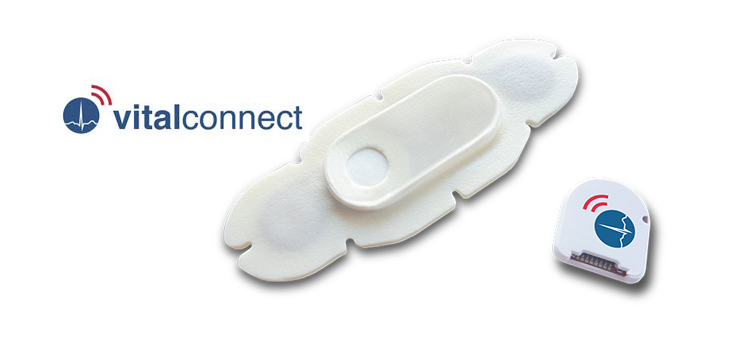
Silicon Valley startup Vital Connect has come up with a disposable Band-Aid sized patch that records and reports on a wide array of vital medical conditions. As reported by Stacy Lawrence, writing for Fierce Medical Devices, this adhesive sensor lasts for up to four days and can be used on patients in a hospital or at home.
Disposable Skin Patch Captures Vital Signs
1 min read Premium comments
Secondary
The peel-and-stick device measures and records single lead ECG, heart rate, heart rate variability, respiratory rate, skin temperature, posture, step count and fall detection with clinical accuracy. Once recorded, the device sends its data via Bluetooth on a mobile device to the Vital Connect platform where healthcare providers can access the data and receive notifications.
The VitalPatch is powered by a disposable zinc air battery that lasts three days with ECG use and about 4 days without it. The company says that its measurements are accurate.
“VitalPatch was designed for patient comfort, ease of use and to optimize clinical workflows, ” said Vital Connect Chairman and CEO Nersi Nazari, M.D., in a statement to Lawrence. “From hospitals to home, medical-grade wearable biosensors have enormous potential to improve patient outcomes, while lowering healthcare costs.”
Steven Steinhubl, M.D. a cardiologist and director of digital medicine for the Scripps Translational Science Institute, said that, “Digital technologies are disrupting and transforming medicine, allowing clinicians to monitor at-risk patients 24×7 while driving proactive, personalized care. The net result will be significant for improved quality of care and a more cost-efficient healthcare delivery system.”
Author
React:
Discussion
This is a fascinating development. In my practice we've seen similar outcomes with the revised protocol. The key differentiator seems to be patient selection criteria. Has anyone else noticed the correlation with BMI thresholds?
Great point. I'd push back slightly on the conclusion, the sample size in the cited study is too small to draw population-level inferences. That said, the directional signal is compelling and worth a larger RCT.
We implemented a similar approach last year. Early results are promising but we're still gathering 12-month follow-up data. Happy to share our protocol if anyone is interested.
Join the conversation
Orthopedic professionals are discussing this. Sign in and upgrade to read every comment and add your voice.