
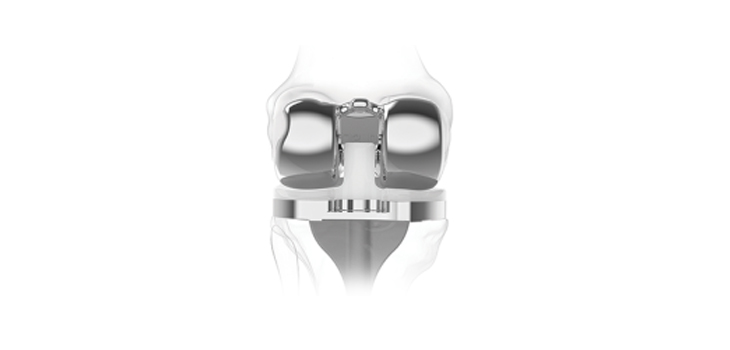
ConforMIS, Inc. has announced the full commercial launch of iTotal PS, the only customized posterior stabilized knee replacement system. Over 1, 000 patients have been treated by select orthopedic surgeons using the iTotal PS during the limited launch over the past 12 months.
ConforMIS, Inc: Full Commercial Launch of iTotal PS
2 min read Premium comments
Secondary
According to the March 2, 2016 news release, “The ConforMIS iTotal PS was designed to address the shortcomings of traditional knee replacements, which come in a fixed set of sizes and shapes. The customized iTotal PS implant builds on the advantages of the iTotal CR system, first introduced in May 2011. The iTotal PS implants are customized for each patient to avoid overhang, rotation, and sizing compromises, common causes of pain after surgery. In addition, iTotal PS is designed to restore the natural shape of each patient’s knee and has a customized cam and spine to provide optimal stability throughout the full range of motion.”
“The full launch of the iTotal PS nearly triples our addressable market. We believe this launch is our single biggest commercial opportunity to date, ” said Philipp Lang, M.D., M.B.A., ConforMIS CEO and president. “With iTotal PS, we have now greatly expanded the number of patients who will be candidates for our customized knee replacement implants. We are very excited to bring the benefits of customized knee replacements to surgeons who prefer a posterior-stabilized design. Since we initiated our limited launch of iTotal PS last year, the feedback from surgeons has been extremely positive.”
Asked how they designed this such that there is no overhang or rotation, Dr. Lang told OTW, “It’s all about fit. The iTotal PS femoral and tibial components are customized for each patient to avoid overhang and under-coverage, and sizing compromises. There is a precise fit in all three femoral compartments, customized posterior fit to avoid overhang, anatomic tibial axis alignment and patient specific profile. It starts by recreating each patient’s unique femoral articulating surfaces. With iTotal, the patient’s anatomic j-curves provides the basis for the implant design, starting with a CT scan for each individual patient. For the iTotal PS design, the design of the cam and spine shape, location, and size are each customized to respect each patient’s unique j-curves throughout the range of motion to provide optimal stability, restore kinematics, reduce potential for a ‘mechanical’ feel.”
Adam Hayden, M.S., M.B.A., senior vice president, Marketing for ConforMIS, told OTW, “The iTotal PS approximately triples the available market for ConforMIS. Our sales organization is approaching this large opportunity in a disciplined and methodical way and we are prepared to execute on this significant growth opportunity. Following AAOS [American Academy of Orthopaedic Surgeons], our salesforce and medical education team will focus on educating and training new PS surgeons utilizing our well-established national training labs and our surgeon visitation program. ConforMIS hosted the first post-launch training lab during the Academy of Orthopedic Surgeons, and we are pleased to report it was a great success, and very well attended. These educational forums will be ongoing and offer surgeons the opportunity to have hands-on experience with the product alongside experienced ConforMIS users.”
React:
Discussion
This is a fascinating development. In my practice we've seen similar outcomes with the revised protocol. The key differentiator seems to be patient selection criteria. Has anyone else noticed the correlation with BMI thresholds?
Great point. I'd push back slightly on the conclusion, the sample size in the cited study is too small to draw population-level inferences. That said, the directional signal is compelling and worth a larger RCT.
We implemented a similar approach last year. Early results are promising but we're still gathering 12-month follow-up data. Happy to share our protocol if anyone is interested.
Join the conversation
Orthopedic professionals are discussing this. Sign in and upgrade to read every comment and add your voice.