
Boston Shoulder Institute: Finding a Better Way to Measure What Matters to Patients
A Better Way to Measure and Communicate Shoulder Outcomes // How to Clear Backlog of OR Cases // and More!
6 min read Premium comments
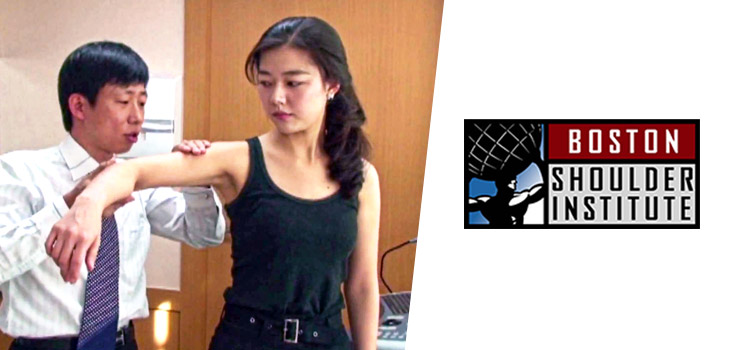
Forget an open-door policy…the policy at the Boston Shoulder Institute is open-everything. Led by Jon J.P. Warner, M.D. and Laurence D. Higgins, M.D., M.B.A., this facility is a standout when it comes to uniting patient-centered care with academic excellence. Dr. Warner, chief of the Boston Shoulder Institute, tells OTW, “We are doing our utmost to bring clarity to a landscape that is riddled with confusion, namely, that of measuring quality. The federal government is struggling with what to measure, and for the most part is asking physicians to measure things that are not important to the patients themselves. Even in the shoulder world we are working diligently to come to an agreement on what tools to use (the American Shoulder and Elbow Society score, the Shoulder Pain and Disability Index, etc.).”
“When you cut through all of the brouhaha, patients only want to know several things: ‘Will I have pain? How fast will I recover? Will I be able to function as I did prior to surgery?’ They want as much clarity as possible. By providing this transparency, we are able to markedly enhance patient education and promote shared decision making.”
To that end, the Boston Shoulder Institute utilizes a tool known as the Surgical Outcomes System (SOS). Dr. Warner says, “This is a method of tracking outcomes via electronic patient questionnaires and objective measurements reported by the surgeon. This database, provided to all members of the Arthroscopy Association of North America at no charge, gives the physician and notably—the patient—detailed information on the process of recovery.”
“Patients, perhaps in collaboration with their doctors, can visit our website (www.bosshin.com), where we have a section labeled, ‘How fast will I recover?’ If someone is undergoing a total shoulder replacement, a reverse shoulder replacement, or a rotator cuff repair, they will find details on three measurements: pain (as measured on the Visual Analog Scale), the patient’s perception of normal (using the Single Assessment Numeric Evaluation), and functionality (using the American Shoulder and Elbow Society score).”
“There is a graph for each measurement. Take primary total shoulder replacement as an example. When the patient asks, ‘Doctor, how much pain will I have?’ then you can point to the graph and show them that there is a trend toward pain dropping progressively through the first two postoperative years. As for their perception of normal, they can see on the graph that the average preoperative shoulder functioning is 28% of normal, but by six months postop the vast majority of patients have recovered to 80% of normal. Seeing this information, the fact that it is relevant to what they want to know, and having it presented in such a clear format is proving invaluable to our patients. I am hopeful that other facilities will undertake such an initiative based on Patient Reported Outcomes [PRO].”
All of this is much more than a feel-good exercise. “We may be able to stratify this data into little or big tears, those patients with or without workers compensation, etc. This type of information enters into the discussions on contracting and bundles. Robert Kaplan, the value guru, and Michael Porter, a pioneer in Value-Based care, have suggested using our SOS data as part of the curriculum in courses they teach at Harvard Business School.”
“We are huge advocates for authentic transparency. There is no shortage of physicians out there saying that they have a zero complication rate. That’s pretty much nonsense. You can’t provide individualized information unless you look at outcomes. Each quarter we systematically analyze our outcomes and then publish them on an annual basis. Orthopedics as a field will benefit greatly if surgeons are willing to make such information available to the public.”
Dr. Warner indicates that he has no financial relationship with Arthrex.
How to Clear a Backlog of OR Cases
How would you feel if a pile of your cases got backed up over the weekend and spilled into Monday and Tuesday? Harried? Frustrated? That’s what was happening to the orthopedic traumatologists at Emory University and its hospital affiliate, Grady Memorial Hospital in Atlanta, Georgia. Robert Runner, M.D. is an orthopedic resident at Emory and is regularly on call at this urban, level I trauma center. He and his colleagues knew that it made more sense to have a dedicated orthopedic trauma OR on Saturdays. They just had to prove it.
Dr. Runner told OTW, “In the past we had to share ORs on weekends with all the different specialties, neurosurgery, ENT, urology, etc. We had patients coming in with open fractures and femoral shaft fractures who really should be in the OR within 6-24 hours…but they kept getting bumped. My colleagues and I would be sitting around the hospital for hours thinking, ‘I’m ready, the patient is ready, but the OR is not.’”
“Everything was getting backed up, either to 3-4am or even delayed all the way to Monday…and we are operating in a major metropolitan city. This would inevitably affect length of stay (LOS) and outcomes for our patients. For example, a patient with a femur fracture comes in Friday night, is ready to go first thing Saturday morning but could be delayed until Sunday or Monday if the ORs were booked. Then you have increased LOS, frustrated surgeons and inefficient patient care. When we went to administration, they were fortunately receptive to our efforts to make improvements.”
“For this study we performed a retrospective chart review on consecutive operative tibia and femur fractures admitted from November 1, 2009 to October 31, 2011. We had added a dedicated Saturday orthopaedic trauma operating room October 31, 2010 and then set out to determine the effect of this policy change on LOS, distribution of caseload, waiting time to surgery and direct variable hospital costs.”
“We found that 6% of the total case volume was added to Saturdays under the new policy with a corresponding 6% reduction in cases on Mondays. Doctor satisfaction was also much higher. If you are on call and you have to be at the hospital all weekend then you want to be using your skills.”
“On average, adding the Saturday orthopaedic trauma OR reduced LOS for all trauma patients admitted with femur or tibia fractures by 2.7 days. Additionally, the waiting time to surgery for patients admitted on a Friday was reduced by an average of 25 hours! It’s been hard to argue with these numbers and on average we saved $1 million dollars per year with the policy change.”
Penn Surgeon: Heal Patients—and Thyself—With Humor
Comedians take big chances…big leaps. When John D. Kelly, IV was a medical student at the University of Cincinnati College of Medicine, he leapt into the void. Dr. Kelly tells OTW, “One day we were sitting in class and the instructor was late. I hopped on ‘stage’ and began doing an impression of the tardy teacher. Yes, he walked in on me. But he didn’t kick me out of class so I suppose I did a satisfactory job of imitating him.”
That was it…a comedian was born.
Now director of Sports Shoulder at the University of Pennsylvania, John D. Kelly, IV, M.D., makes a (comedy) routine out of nearly every encounter—patient or otherwise.
“Unlike what we study in books, humor is hard to measure and quantify. But we know it when we see it. We not only feel good inside, but we feel a bit more connected to the person reaching out with humor. And for doctors, this can go a long way toward establishing rapport and trust.”
Dr. Kelly, who once shared his mirth on Oprah Radio, notes, “People are typically nervous when they visit a doctor. They expect us to be serious and perhaps intimidating. Humor can ‘disarm’ their nervousness, however, and set the ‘stage’ for a positive, collaborative relationship.”
A regular at the local comedy clubs and charity events, Dr. Kelly says that using humor just makes doctors happy…and happy doctors will provide better patient care. “One time I had a patient who succumbed to cancer. A short time later his wife attended one of my standup events. She texted me immediately afterwards, stating: ‘Thank you for making me so happy.’
There is simply no better reward.”
“Share a vignette from medical school where you don’t come off looking so good. Tell a joke. Even if you don’t succeed they will ‘get’ that you are trying to reach out from behind the white coat. There is no more appropriate quote here than that of Maya Angelou: ‘I’ve learned that people will forget what you said, people will forget what you did, but people will never forget how you made them feel.’”
“You do have to be sensitive when using humor. Healthy humor is positive, affirming and looks for the GOOD in others. It is never to be used as a weapon or at someone else’s expense.”
“Laughter lowers blood pressure, stress, and cortisol…it promotes healing and enhanced immune function.”
And that’s just for the doctor!
Seriously, folks…give chortles/giggles/guffaws a chance. You just might help your patients and your days will be lighter.
React:
Discussion
This is a fascinating development. In my practice we've seen similar outcomes with the revised protocol. The key differentiator seems to be patient selection criteria. Has anyone else noticed the correlation with BMI thresholds?
Great point. I'd push back slightly on the conclusion, the sample size in the cited study is too small to draw population-level inferences. That said, the directional signal is compelling and worth a larger RCT.
We implemented a similar approach last year. Early results are promising but we're still gathering 12-month follow-up data. Happy to share our protocol if anyone is interested.
Join the conversation
Orthopedic professionals are discussing this. Sign in and upgrade to read every comment and add your voice.