
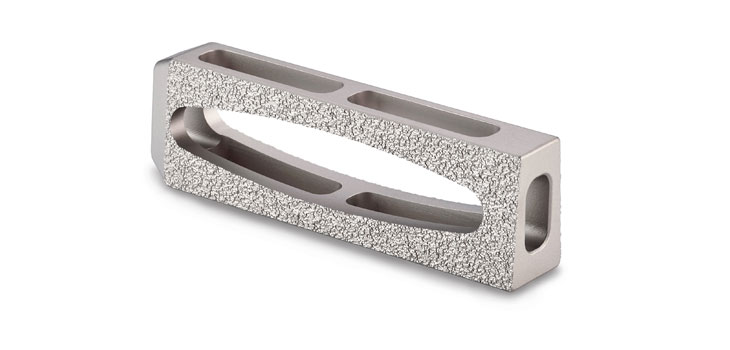
Titan Spine LLC is on a roll, with a 51% increase in sales of its Endoskeleton interbody fusion devices in 2015 compared to the previous year. The company has also reported over $33.5 million in worldwide sales in 2015, with sales in the fourth quarter 2015 alone equating to annualized run rate of $43.1 million.
Titan Spine: Sales are Booming!
2 min read Premium comments
Secondary
Titan Spine President Kevin Gemas added, “We also achieved several key milestones that have enabled significant advancement in revenue and community recognition. These include securing FDA clearance of our latest interbody device, the TCS for cervical fusion with integrated fixation; expanding our portfolio offering in Europe through a strategic distribution partnership with MBA thereby further penetrating markets of six EU countries and broadening surgeon adoption; and earning an Orthopedics This Week Spine Technology Award for our enhanced nanoLOCK surface technology.”
Titan CEO Peter Ullrich also commented, “The considerable progress Titan Spine achieved in 2015 is a reflection of the interbody device market’s accelerating shift toward titanium implants, which is due, at least in part, to our continually expanding science and research. This year, we demonstrated that Titan Spine’s surface-etched titanium implants reduce subsidence compared to PEEK, promote an anti-inflammatory cellular environment compared to PEEK, and show no signs of impaction debris whereas titanium-coated PEEK implants have the potential to generate debris during simulated impaction into the disc space. These data are generating heightened interest and awareness of the downfalls of PEEK, and have been a focus of the spine community at medical meetings and within publications over this past year, notably including our oral podium presentation at ISASS 2015 and publications in Spine and The Spine Journal.”
Ullrich told OTW, “At Titan, we measure success by the satisfaction of our patient and surgeon customers. We have received countless messages from Titan patients telling us how great they are feeling and how they are now able to perform activities that had been lost prior to their fusion. And it is also very gratifying to often hear from our surgeon customers that report faster recovery and return to activity times for their Titan patients compared to when they were using different interbody fusion technologies. We are humbled and honored to know that we are helping so many people.”
“In the coming months, Titan is planning to roll out the full launch of our new nanoLOCK surface, which represents a significant improvement over our current surface technology and is the only engineered and validated nanotechnology for the spine. The surface is unique in that it features an increased amount of nano-scaled textures that result in the up-regulation of a greater amount of osteogenic and angiogenic growth factors on the cellular/biochemical level that are critical for bone growth and fusion as compared to PEEK and the company’s current surface.”
React:
Discussion
This is a fascinating development. In my practice we've seen similar outcomes with the revised protocol. The key differentiator seems to be patient selection criteria. Has anyone else noticed the correlation with BMI thresholds?
Great point. I'd push back slightly on the conclusion, the sample size in the cited study is too small to draw population-level inferences. That said, the directional signal is compelling and worth a larger RCT.
We implemented a similar approach last year. Early results are promising but we're still gathering 12-month follow-up data. Happy to share our protocol if anyone is interested.
Join the conversation
Orthopedic professionals are discussing this. Sign in and upgrade to read every comment and add your voice.