
Japan’s Kyoto University and Panasonic Corporation have joined forces to develop a sensing technology that will remotely detect heart rate and heartbeat intervals without any sensor on the patient’s body. The system is based on radar and is reported by Stacy Lawrence, writing for Fierce Medical Devices.
Sensor-Less Athlete Performance Monitoring
1 min read Premium comments
Secondary
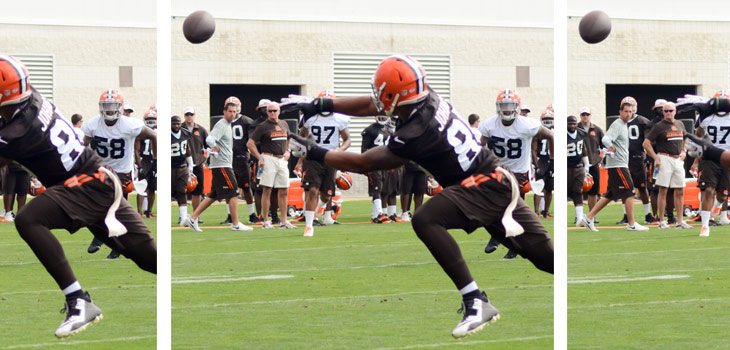
Researchers believe the technology could monitor patients at home or at their work places and could also be used to track vital signs for athletes such as breathing and bodily movement.
“Taking measurements with sensors on the body can be stressful and troublesome, because you have to stop what you’re doing, ” said Panasonic researcher Hiroyuki Sakai in a statement. “What we tried to make was something that would offer people a way to monitor their body in a casual and relaxed environment.”
According to Lawrence, the radar-based monitoring system is expected to be part of technology that will enable individuals to monitor their own health. Lawrence wrote that it, “combines millimeter-wave spread-spectrum radar technology with a signal analysis algorithm that identifies signals from the body.”
He quoted Toru Sato, professor of communications and computer engineering at Kyoto University as saying, “Heartbeats aren’t the only signals the radar catches. The body sends out all sorts of signals at once, including breathing and body movement. It’s a chaotic soup of information. Our algorithm differentiates all of that. It focuses on the features of waves including heart beats from the radar signal and calculates their intervals. Now that we know that remote sensing is possible, we’ll need to make the measurement ability more robust so that the system can monitor subjects in various age ranges and in many different contexts.”
Author
React:
Discussion
This is a fascinating development. In my practice we've seen similar outcomes with the revised protocol. The key differentiator seems to be patient selection criteria. Has anyone else noticed the correlation with BMI thresholds?
Great point. I'd push back slightly on the conclusion, the sample size in the cited study is too small to draw population-level inferences. That said, the directional signal is compelling and worth a larger RCT.
We implemented a similar approach last year. Early results are promising but we're still gathering 12-month follow-up data. Happy to share our protocol if anyone is interested.
Join the conversation
Orthopedic professionals are discussing this. Sign in and upgrade to read every comment and add your voice.