
You might say that scientists from Universidad Politécnica de Madrid (UPM) have a “shoulder-bot.” Their new robotic exoskeleton is meant to improve the recovery of patients with shoulder injuries.
Robotics Exoskeleton Aids Shoulder Rehabilitation
2 min read Premium comments
Secondary
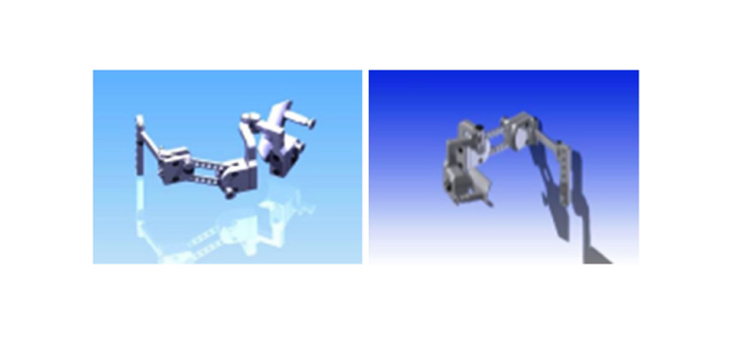
According to the January 20, 2016 news release, “A team from the Centre for Automation and Robotics (CAR, UPM-CSIC) has developed a robotic exoskeleton that performs more efficiently rehabilitation therapies of patients with shoulder injuries. By using strength and motion sensors, the system assesses the degree of an injury and its evolution as the treatment progresses.”
“Rehabilitation therapies performed by intelligent robotic systems have been shown to reduce patients’ recovery time. However, there are very few robotic systems for recovery of shoulder injuries. In this context, researchers from CAR have developed a robotic exoskeleton that, apart from lessening the recovery time of an injury, assesses and registers the progress of the entire rehabilitation process.”
According to the main researcher, Cecilia García Cena, simulating the skeletal system is not enough to develop this exoskeleton, it is needed to incorporate both the kinematics and dynamics of a complete model that takes into account the skeletal system, muscles, tendons and ligaments. All these elements are included in the new intelligent robotic system.
The exoskeleton developed by researchers is inexpensive, easy to use and adaptable to any patient. This system can help to relieve saturated rehabilitation units, with the consequent saving in the healthcare system.
Asked about the background, García Cena told OTW, “The rehabilitation head of the Hospital Infanta Sofia of Madrid talked with us about the necessity of a exoskeleton for the rehabilitation of the upper limb. At the present, the physiotherapists do a hard work every day with the patients, because they have to push and pull the upper limb during the rehabilitation session. Furthermore, they need to have evidence about the evolution of the patient. The exoskeleton can track all the movements and the data can save in the computer. The principal objective of our work is to give a powerful tool to the physiotherapists and help them to rehabilitate more patients at a time.”
“The development of the musculoskeletal model of the upper limb was a complex process that requires much research and the profound study of the anatomy and physiology of the shoulder joint using the same literature that medical students [use].”
“The use of free software to develop a musculoskeletal model of the upper limb was a big challenge, since it does not have all the tools of a commercial software, which facilitate the development of the model. This increases the amount of work, but the costs savings are significant.”
“Our system has four features. The first one is a real-time kinematic data acquisition system of the movement made by the patient. The data is introduced into a 3D musculoskeletal simulation system to obtain information about the muscles affected by the injury and to evaluate their recovery capacity. This constitutes the second feature. The third one enables the rehabilitation physician to do the simulations and determine the effect a particular treatment would have in a patient. The last feature is the upper limb exoskeleton, which help in the diagnosis and rehabilitation. The system described is a valuable clinical tool for the medical staff and also a research and training tool for future specialists in the rehabilitation field.”
Author
React:
Discussion
This is a fascinating development. In my practice we've seen similar outcomes with the revised protocol. The key differentiator seems to be patient selection criteria. Has anyone else noticed the correlation with BMI thresholds?
Great point. I'd push back slightly on the conclusion, the sample size in the cited study is too small to draw population-level inferences. That said, the directional signal is compelling and worth a larger RCT.
We implemented a similar approach last year. Early results are promising but we're still gathering 12-month follow-up data. Happy to share our protocol if anyone is interested.
Join the conversation
Orthopedic professionals are discussing this. Sign in and upgrade to read every comment and add your voice.