
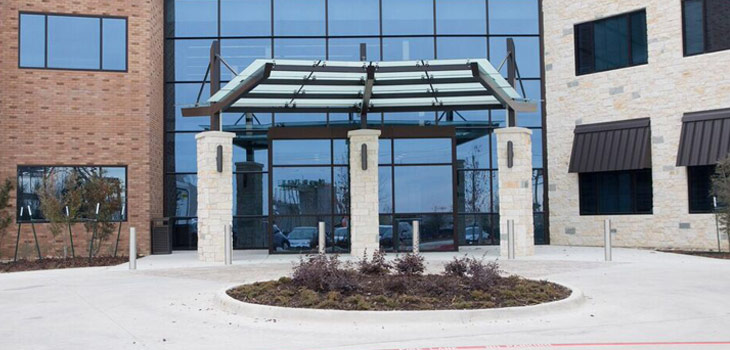
A celebration was held recently when OrthoTexas Orthopedics and Sports Medicine moved into the McKinney Medical Village in McKinney, Texas.
OrthoTexas Orthopedics and Sports Medicine Opens New Location
1 min read Premium comments
Secondary
According to the February 16, 2016 news release, “In January 2011, four orthopedic groups (Metrocrest Orthopaedics and Sports Medicine, Associated Orthopedics and Sports Medicine, Orthopaedic Associates of North Texas and Orthopedic Specialists of North Texas) merged together under one name—OrthoTexas Orthopedics and Sports Medicine—to become one of the largest orthopedic groups in Texas. The 25 physicians and surgeons who make up OrthoTexas are now able to offer more comprehensive and compassionate orthopedic care, therapy services, in-house imaging services, and outpatient surgery services to patients at seven convenient locations. OrthoTexas is a private practice and is proud to have been serving within their communities for 5 years as a complete orthopedic care clinic, focused on complete patient satisfaction.”
Leonard Ratley, CEO of OrthoTexas Physicians & Surgeons, told OTW, “At OrthoTexas Physicians and Surgeons, it is our goal to provide our patients an all-inclusive orthopedic experience during their journey to recovery. Now, as a part of McKinney Medical Village, our patients will have even further access to physicians who can provide for their full range of healthcare needs. From full body orthopedic care to rehabilitative therapy in our OrthoTexas suite to primary care physicians and specialists, patients in McKinney now have access to complete care under one roof. The medical village benefits all the physicians by allowing for seamless transitions and referrals between providers.”
Author
React:
Discussion
This is a fascinating development. In my practice we've seen similar outcomes with the revised protocol. The key differentiator seems to be patient selection criteria. Has anyone else noticed the correlation with BMI thresholds?
Great point. I'd push back slightly on the conclusion, the sample size in the cited study is too small to draw population-level inferences. That said, the directional signal is compelling and worth a larger RCT.
We implemented a similar approach last year. Early results are promising but we're still gathering 12-month follow-up data. Happy to share our protocol if anyone is interested.
Join the conversation
Orthopedic professionals are discussing this. Sign in and upgrade to read every comment and add your voice.