
CollPlant, Ltd., a regenerative medicine company located in Israel, reported positive final clinical study results for its product Vergenex STR as a treatment for tendinopathy. The trial was a prospective, open label, single arm trial, conducted at three leading Israeli hospitals—Meir Medical Center, Assaf Harofeh Medical Center and Hadassah Hospital.
Novel Collagen Scores Well in Tendinopathy Test
1 min read Premium comments
Secondary
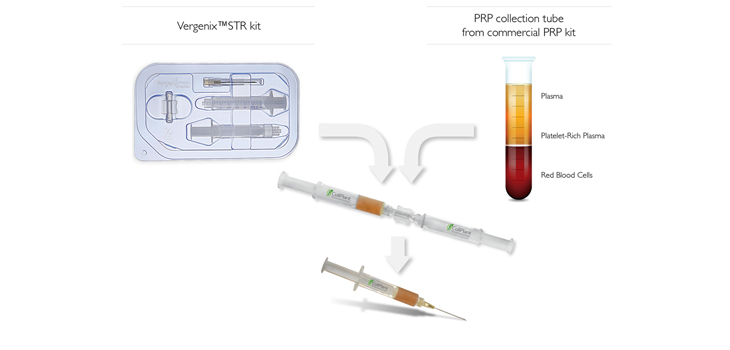
Vergenix STR, is a blend of CollPlant’s recombinant human collagen and platelet-rich plasma (PRP) derived from the patient’s own blood. It is intended to be used to treat patients who are suffering from tendinopathy.
Following its injection into the injured site, this novel combination of human recombinant collagen and the patient’s own PRP changes from a fluid to a solid and then releases, in a controlled fashion, platelet-derived proteins. These proteins, in combination with collagen, induce a healing effect in the tendon say study investigators.
The study’s researchers enrolled 20 patients suffering from inflammation of the elbow (tennis elbow) and tracked their progress over a period six months following initial treatment. In order to assess Vergenex STR’s performance, they measured each patient’s change in pain and motion, as reported by the specific Patient Related Tennis Elbow Evaluation questionnaire (“PRTEE”).
At three months, Vergenix STR patients reported an average PRTEE score improvement of 55.8%. At the six-month follow-up, Vergenix STR patients reported a mean PRTEE score improvement of 58.1%.
According to CollPlant officials, the performance of Vergenix STR compared favorably to published results of standard-of-care tennis elbow therapies. At three months, 80% of Vergenix STR patients showed at least a 25% reduction in their PRTEE score while, in a randomized, controlled trial comparing PRP with steroids, 67% of PRP patients and 48% of steroid patients had at least a 25% reduction in pain and disability. At six months, 90% of Vergenix STR patients showed at least a 25% reduction in PRTEE scores, while 68% of PRP patients and 36% of patients given steroids had at least a 25% reduction in pain and disability.
Author
React:
Discussion
This is a fascinating development. In my practice we've seen similar outcomes with the revised protocol. The key differentiator seems to be patient selection criteria. Has anyone else noticed the correlation with BMI thresholds?
Great point. I'd push back slightly on the conclusion, the sample size in the cited study is too small to draw population-level inferences. That said, the directional signal is compelling and worth a larger RCT.
We implemented a similar approach last year. Early results are promising but we're still gathering 12-month follow-up data. Happy to share our protocol if anyone is interested.
Join the conversation
Orthopedic professionals are discussing this. Sign in and upgrade to read every comment and add your voice.