
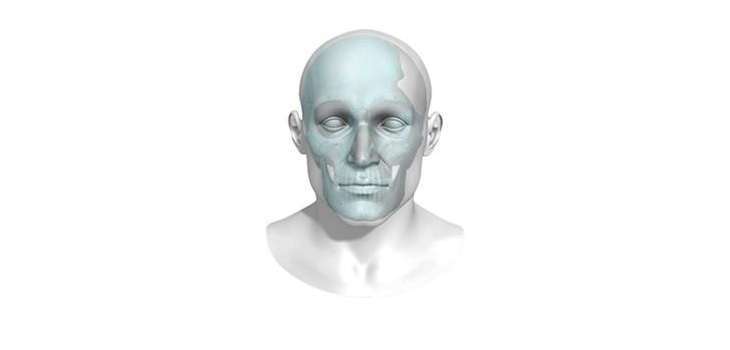
BioArchitects USA has received 510(k) clearance from the U.S. Food and Drug Administration for the company’s 3-D printed patient specific titanium cranial/craniofacial plate implant. The implant is designed for the repair of defects in the non-load hearing bones of the head and face. Each custom designed plate is permanently attached to the skull and/or face with self-tapping titanium screws.
FDA Clears 3D Printed Skull Plate
1 min read Premium comments
Secondary
According to information supplied by the company, this is the first of its kind U.S. device that uses 3-D printing technology from Arcam AB. The work takes advantage of the light weight and tensile strength of the titanium alloy. The alloy is made from Arcam’s Electron Beam Melting (EBM) technology.
“We are extremely proud to contribute to what we consider another major advance in the trend toward personalized medicine. We believe that this is yet another step toward what will ultimately become the new standard of care, ” said Mark Ulrich, CEO of BioArchitects USA.
Ulrich explained that since every device is made for a single individual construction begins with a CAT scan or MRI of the affected area. This becomes the model from which the 3-D printer constructs the titanium plate. The end product is the result of collaboration between the surgeon and the biomedical engineer responsible for the design.
Magnus Rene, CEO of the Arcam Group, said, “BioArchitects is a prime example of how innovative organizations are using technology to advance biomedical surgeries that truly effect people’s lives. Arcam has been a strategic supplier to the orthopedic market for over a decade and tens of thousands of implants are made yearly from our EBM systems. It is clear that both BioArchitects and Arcam are advancing patient care with new technologies that will make a significant difference in the world of medicine for years to come.”
Author
React:
Discussion
This is a fascinating development. In my practice we've seen similar outcomes with the revised protocol. The key differentiator seems to be patient selection criteria. Has anyone else noticed the correlation with BMI thresholds?
Great point. I'd push back slightly on the conclusion, the sample size in the cited study is too small to draw population-level inferences. That said, the directional signal is compelling and worth a larger RCT.
We implemented a similar approach last year. Early results are promising but we're still gathering 12-month follow-up data. Happy to share our protocol if anyone is interested.
Join the conversation
Orthopedic professionals are discussing this. Sign in and upgrade to read every comment and add your voice.