
It’s a first…researchers from New York have identified and isolated a stem cell population capable of skull formation and craniofacial bone repair in mice. According to the February 1, 2016 news release, senior author Wei Hsu, Ph.D., dean’s professor of Biomedical Genetics and a scientist at the Eastman Institute for Oral Health at the University of Rochester Medical Center, said the goal is to better understand and find stem cell therapy for a condition known as craniosynostosis, a skull deformity in infants. Craniosynostosis often leads to developmental delays and life-threatening elevated pressure in the brain.
Eureka! Stem Cells Capable of Skull Formation and Bone Repair
2 min read Premium comments
Secondary
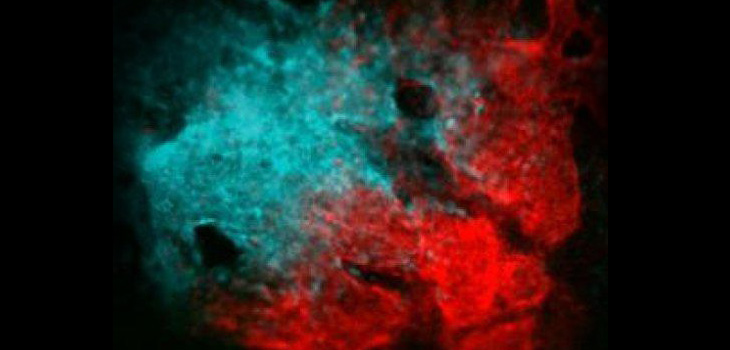
Dr. Hsu told OTW, “My lab has been working on the Axin2 gene over the past 12 years or so. In 2005, we first reported that Axin2 mutation causes craniosynostosis. We then went on to demonstrate that Axin2 is a key determinant in skeletal stem cell fate. This led to our new hypothesis in which the presence of skeletal stem cell and niche is required to prevent the development of craniosynostosis. We therefore studied the expression pattern of Axin2 in the skeletogenic mesenchyme and found that it is uniquely expressed in a small subset of cells coinciding with the postulated niche for stem cells. We therefore carried out extensive experiments shown in the current Nature Communications paper.”
“It was surprising to see that a single Axin2-expressing cell is able to regenerate bone after transplantation as shown by the clonal cell analysis. Successful bone regeneration can be achieved by transplanting a single stem cell instead of a large population of bone forming (osteoblast) cells. We estimated that only ~0.13% of cells are stem cells. However, upon injury they expand drastically and give rise to more than 90% of cells/major cell source for calvarial bone healing.”
“In addition, the Axin2-expressing cells are stem cells responsible for the craniofacial skeleton but not the body skeletons. It’s commonly considered that stem cells capable of giving rise to bone forming cells/osteoblasts are the same for craniofacial and body skeletons. Our data indicate that there are two distinct stem cell populations. This might be because of different bone formation/ossification mechanisms utilized for the craniofacial and body skeletons. The craniofacial bone formation is mainly mediated by intramembranous ossification while the body skeleton is formed through endochondral ossification.”
“The transplanted stem cells isolated from the skull form bones via intramembranous but not endochondral ossification. The results suggest these naïve cells have intrinsic properties knowing what they are and need to differentiate into—maintenance of developmental potentials.”
“The source of cells maybe critical for reconstructive surgeries, especially in the craniofacial regions. Stem cell-based therapy, e.g. transplantation of stem cells or modulation of the stem cell population, should be considered for functional improvement.”
React:
Discussion
This is a fascinating development. In my practice we've seen similar outcomes with the revised protocol. The key differentiator seems to be patient selection criteria. Has anyone else noticed the correlation with BMI thresholds?
Great point. I'd push back slightly on the conclusion, the sample size in the cited study is too small to draw population-level inferences. That said, the directional signal is compelling and worth a larger RCT.
We implemented a similar approach last year. Early results are promising but we're still gathering 12-month follow-up data. Happy to share our protocol if anyone is interested.
Join the conversation
Orthopedic professionals are discussing this. Sign in and upgrade to read every comment and add your voice.