
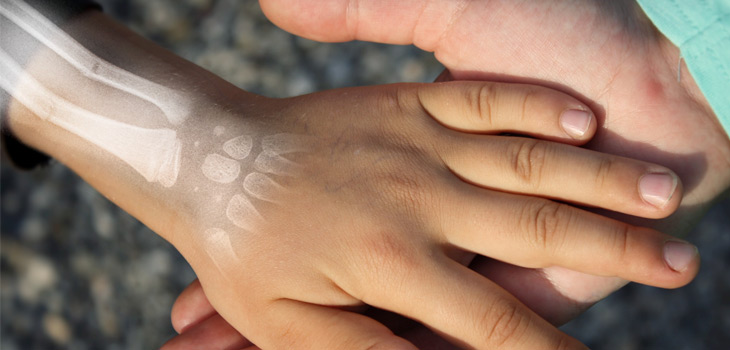
UK researchers have found that a child’s risk of fracture can depend upon their ethnicity and where they live in the UK. As indicated in the February 2, 2016 news release, an analysis of the UK Clinical Practice Research Datalink database by researchers at the Medical Research Council (MRC) Lifecourse Epidemiology Unit, University of Southampton, found that rates of broken bones were higher in white children (150 per 10, 000 children per year) compared to those amongst South Asian children (81 fractures per 10, 000 children per year) and black children (64 fractures per 10, 000 children per year).
Childhood Fractures Vary by Geography in the UK
2 min read Premium comments
Secondary
The highest fracture rates were found in Wales where children were almost twice as likely to fracture as those living in Greater London. Fracture rates in the North of England and Scotland were also higher than those in the South.
Nicholas Harvey, Professor of Rheumatology and Clinical Epidemiology at the MRC Lifecourse Epidemiology Unit, University of Southampton, led the study with Dr. Rebecca Moon, Clinical Research Fellow in Paediatrics.
Professor Harvey said: “Our findings suggest that 30 per cent of boys and 19 per cent of girls will sustain a broken bone before their 18th birthday. However there is no clear indication at this point for why there are these differences in fracture rates. Further work will be needed to understand the reasons for the variation in fracture rates across the UK, but are likely to involve differences in socio-economic circumstances, ethnic diversity, and levels of obesity and physical activity.”
Harvey told OTW, “This work forms part of a larger programme of research at the MRC Lifecourse Epidemiology Unit, University of Southampton, led by Professor Cyrus Cooper, Professor Elaine Dennison and Professor Nicholas Harvey, in which the aim is to develop novel interventions to reduce the risk of fragility fracture in older age. The programme combines the study of risk factors for fracture across the whole of life from cradle to grave, mechanisms which might explain these observations, and translation into potential interventions through randomised controlled trials. This study of fracture rates amongst children forms a key part of this programme, and is the first study published as part of a body of work funded by the National Osteoporosis Society, in which we comprehensively describe the impact of osteoporotic fracture on the UK population.”
“The findings are consistent with evidence that has come from elsewhere, mainly in adults, that there are differences in fracture risk according to ethnicity and geographic location. These are likely to reflect differences in genetic make up, which determine bone density and bone structure/shape. Overall the findings demonstrate that the services for childhood fracture would optimally be tailored to the needs of the individual area, reflecting local rates of fracture, ethnic and sociodemographic mix.”
React:
Discussion
This is a fascinating development. In my practice we've seen similar outcomes with the revised protocol. The key differentiator seems to be patient selection criteria. Has anyone else noticed the correlation with BMI thresholds?
Great point. I'd push back slightly on the conclusion, the sample size in the cited study is too small to draw population-level inferences. That said, the directional signal is compelling and worth a larger RCT.
We implemented a similar approach last year. Early results are promising but we're still gathering 12-month follow-up data. Happy to share our protocol if anyone is interested.
Join the conversation
Orthopedic professionals are discussing this. Sign in and upgrade to read every comment and add your voice.