
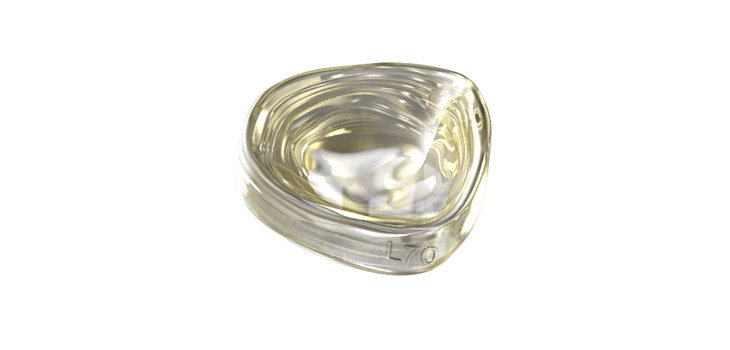
Active Implants LLC, a privately held company in Memphis, Tennessee, that develops orthopedic implant solutions, is initiating a second clinical trial to evaluate a meniscus implant called NUsurface. According to the news release, NUsurface is made from medical grade plastic and does not require fixation to bone or soft tissue.
Artificial Meniscus Begins Clinical Trial
2 min read Premium comments
Secondary
Company officials claim that the NUsurface device mimics the function of the natural meniscus and redistributes loads transmitted across the knee joint. It is inserted into the knee joint through a small incision and patients typically can go home soon after the operation. After surgery, patients undergo a six-week rehabilitation program. NUsurface has been used clinically in Europe since 2008 and in Israel since 2011.
The trial is planned to enroll 120 patients at up to 20 sites nationwide who experience persistent knee pain that is caused by injured or deteriorating meniscus cartilage. The investigational meniscus replacement trial is being evaluated as a treatment option to help patients delay or avoid total knee replacement.
The meniscus is a tissue pad between the thigh and shin bones. Once it is damaged, the meniscus has a limited ability to heal. Over 1 million partial meniscectomies, designed to remove or repair torn meniscus, are performed in the U.S. every year.
“A damaged meniscus has a very limited healing potential, oftentimes leading to knee replacement surgery, ” said Active Implants CEO Henry Klyce. “There is an unmet need in the orthopedic market for a treatment option—such as the investigational NUsurface Meniscus Implant—that can fill the gap between minimally invasive meniscus repair and total knee replacement.”
The following orthopedic centers are or will be recruiting patients.
- Phoenix, Arizona – TOCA, The Orthopedic Clinic Association – Tom Carter, M.D.
- Long Beach, California – Memorial Orthopaedic Surgical Group – Peter Kurzweil, M.D.
- San Francisco, California – St Mary’s Medical Center – William Montgomery, M.D.
- Boulder, Colorado – Colorado University Sports Medicine – Eric McCarty, M.D.
- Denver, Colorado – Advanced Orthopedics & Sports Medicine Specialists – Wayne Gersoff, M.D.
- Baton Rouge, Louisiana – Baton Rouge Orthopaedic Clinic – Robert Easton, M.D.
- New Orleans, Louisiana – Ochsner Sports Medicine Institute – Deryk Jones, M.D.
- Portland, Oregon – Oregon Sports Medicine – John Greenleaf, M.D.
- Arlington, Texas – Baylor Orthopedic and Spine Hospital – Joseph Berman, M.D.
- Salt Lake City, Utah – Salt Lake Regional Medical Center – Andrew Cooper, M.D.
Author
React:
Discussion
This is a fascinating development. In my practice we've seen similar outcomes with the revised protocol. The key differentiator seems to be patient selection criteria. Has anyone else noticed the correlation with BMI thresholds?
Great point. I'd push back slightly on the conclusion, the sample size in the cited study is too small to draw population-level inferences. That said, the directional signal is compelling and worth a larger RCT.
We implemented a similar approach last year. Early results are promising but we're still gathering 12-month follow-up data. Happy to share our protocol if anyone is interested.
Join the conversation
Orthopedic professionals are discussing this. Sign in and upgrade to read every comment and add your voice.