
According to a report in the journal Nature Biotechnology, bioengineers have succeeded in developing a 3D tissue organ printer that can fabricate stable, human sized bones, muscle and cartilage using stem cells and polymer templates.
3D Printed Organs a Growing Possibility
1 min read Premium comments
Secondary
Anthony Atala, M.D., of Wake Forest School of Medicine in North Carolina, told Reuters Health that he and his colleagues “present an integrated tissue–organ printer (ITOP) that can fabricate stable, human-scale tissue constructs of any shape. The results of this study bring us closer to the reality of using 3D printing to repair defects using the patient’s own engineered tissue.”
Atala identified the problem of producing larger organs with 3D printing as one in which larger tissues require additional nutrition. He and his team resolved that problem, at least in part, by developing a process he calls the “integrated tissue and organ printing system, ” which produces a network of tiny channels that allows the printed tissue to be nourished after being implanted into a living animal. The polymer template eventually dissolves, he says, and is replaced by a viable organ.
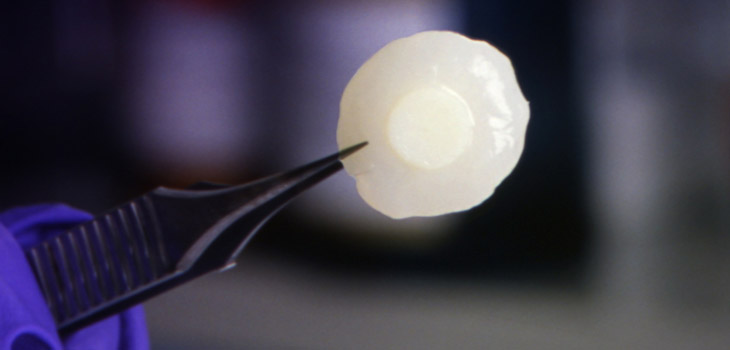
As a demonstration, the research team “printed” a full-size human ear. The report in Sputnik International claimed that the ear cartilage looked like normal cartilage under a microscope, with blood vessels supplying the outer regions and with no circulation in the inner regions—which is typical of native cartilage. According to the article, the ear was later implanted into living mice. The ear was not rejected, became covered with blood vessels and “eventually became part of the animal’s system.”
The researchers caution that their new method is not yet ready for clinical use, but they are certain that it will not be long before it becomes widely applied in regenerative medicine.
Author
React:
Discussion
This is a fascinating development. In my practice we've seen similar outcomes with the revised protocol. The key differentiator seems to be patient selection criteria. Has anyone else noticed the correlation with BMI thresholds?
Great point. I'd push back slightly on the conclusion, the sample size in the cited study is too small to draw population-level inferences. That said, the directional signal is compelling and worth a larger RCT.
We implemented a similar approach last year. Early results are promising but we're still gathering 12-month follow-up data. Happy to share our protocol if anyone is interested.
Join the conversation
Orthopedic professionals are discussing this. Sign in and upgrade to read every comment and add your voice.