
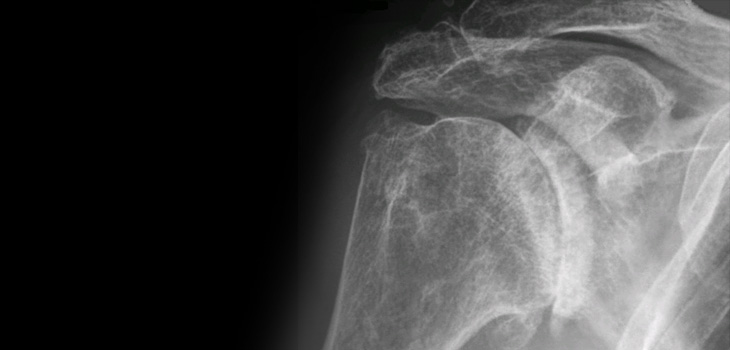
Hip and knee replacements for patients with osteoarthritis (OA) cost roughly $13.7 billion every year in the United States, according to estimates by the Center for Disease Control and Prevention. Another $28.5 billion is spent on additional hospital expenditures for care of patients with arthritis in their knees or hips. But that is not the total picture. A study by researchers from Boston University’s School of Medicine has found that many cases of hip or knee osteoarthritis are not diagnosed because they fail to show up on traditional X-rays.
X-rays Fail to Detect Osteoarthritis
3 min read Premium comments
Secondary
The researchers found that it is not uncommon for patients suffering from hip pain to show no signs of osteoarthritis on X-rays, and it is also not uncommon for osteoarthritis to appear on X-rays of patients who are NOT experiencing hip pain.
The Boston University researchers relied on data from the famous Framingham study.
The Framingham Study
In 1948, the Framingham Heart Study—under the direction of the National Heart Institute (now known as the National Heart, Lung, and Blood Institute or NHLBI)—launched what would eventually become the single most famous clinical study in history—The Framingham Heart Study. At the time, little was known about the general causes of heart disease and stroke, but the death rates for cardiovascular disease (CVD) had been increasing steadily since the beginning of the century and had become an American epidemic.
The Framingham Heart Study became a joint project of the National Heart, Lung and Blood Institute and Boston University.
Every two years beginning in 1948, 5, 209 men and women between the ages of 30 and 62 from the town of Framingham, Massachusetts, would come to Boston University hospital for extensive physical examinations and lifestyle interviews.
The objective of the Framingham Heart Study was to identify the common factors or characteristics that contribute to CVD by following its development over a long period of time in a large group of participants who had not yet developed overt symptoms of CVD or suffered a heart attack or stroke.
Over the ensuing decades, data built up and common patterns related to CVD emerged. In 1971, the Study began enrolling the children and their spouses—5, 124 members of the next generation of Framingham study participants—in similar examinations.
In April 2002 the Study entered yet another new phase when it began enrolling the grandchildren of the Original Cohort!
No study in history has put together the longitudinal data that the Framingham study has. And since it beginning 68 years ago, the data has expanded from heart disease to diseases of the musculoskeletal system. Since its start, this study has generated more than 2, 100 peer reviewed study papers and completely changed how scientists look at heart disease.
The Framingham Osteoarthritis and Osteoarthritis Initiative
The Framingham Osteoarthritis and Osteoarthritis Initiative collected longitudinal data on roughly 4, 500 patients.
The Study’s authors found that they could detect arthritis on the X-rays of only about 16% of the patients who complained of hip pain. Most confounding was the other study outcome that 21% of the study patients had signs of osteoarthritis on their radiographic images but did NOT report hip pain.
Study co-author Chan Kim, M.D., said, “The majority of older subjects with high suspicion for clinical hip osteoarthritis did not have radiographic hip osteoarthritis, suggesting that many older persons with hip osteoarthritis might be missed if diagnosticians relied on hip radiographs to determine if hip pain was due to osteoarthritis. Given these findings, patients with suspected hip OA should be treated regardless of X-ray confirmation.”
The researchers noted that patients who suffer from hip osteoarthritis tend to be more sedentary than those who do not experience hip pain. Such a lifestyle component was highly correlated with increased risk of falls, obesity, heart and lung disease, and diabetes, making it essential, in the study investigator’s opinions to diagnose and treat hip osteoarthritis early. The researchers published the results of their study in The BMJ.
Reference: Association of hip pain with radiographic evidence of hip osteoarthritis: diagnostic test study BMJ 2015; 351 doi: (Published 02 December 2015) Cite this as: BMJ 2015;351:h5983
Author
React:
Discussion
This is a fascinating development. In my practice we've seen similar outcomes with the revised protocol. The key differentiator seems to be patient selection criteria. Has anyone else noticed the correlation with BMI thresholds?
Great point. I'd push back slightly on the conclusion, the sample size in the cited study is too small to draw population-level inferences. That said, the directional signal is compelling and worth a larger RCT.
We implemented a similar approach last year. Early results are promising but we're still gathering 12-month follow-up data. Happy to share our protocol if anyone is interested.
Join the conversation
Orthopedic professionals are discussing this. Sign in and upgrade to read every comment and add your voice.