
Scientists at the University of Michigan at Ann Arbor have developed a polymer sphere that can deliver a molecule to cells at a bone wound site and tell the cells to begin repairing the injury.
Polymer Spheres Delivers RNA to Bone Wound Site
1 min read Premium comments
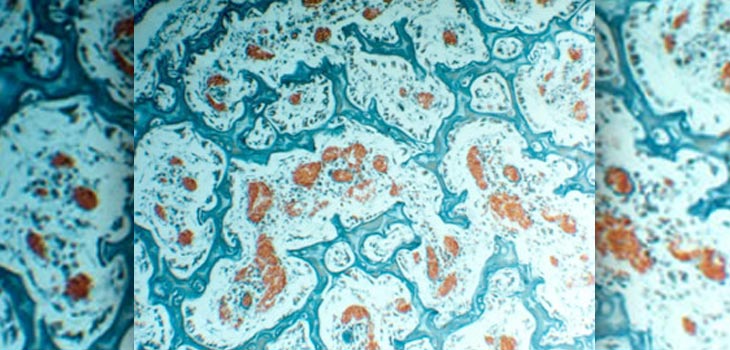
Secondary
Lead researcher Peter X. Ma, MS, Ph.D., professor of dentistry, said that it is typically very difficult for microRNA to breach the fortress of the cell wall. The polymer sphere developed by Ma’s lab easily enters the cell and delivers the microRNA.
Ma said that the technology can help grow bone in people undergoing bone surgery or joint repair, or people with oral implants. The microRNA is time-released, which allows for therapy that lasts for up to a month or longer. Bone repair is especially challenging in patients with healing problems, said Ma, but his lab was able to heal bone wounds in osteoporotic mice.
“The new technology we have been working on opens doors for new therapies using DNA and RNA in regenerative medicine and boosts the possibility of dealing with other challenging human diseases, ” Ma said.
The findings are scheduled for publication in the January issue of Nature Communications.
Author
React:
Discussion
This is a fascinating development. In my practice we've seen similar outcomes with the revised protocol. The key differentiator seems to be patient selection criteria. Has anyone else noticed the correlation with BMI thresholds?
Great point. I'd push back slightly on the conclusion, the sample size in the cited study is too small to draw population-level inferences. That said, the directional signal is compelling and worth a larger RCT.
We implemented a similar approach last year. Early results are promising but we're still gathering 12-month follow-up data. Happy to share our protocol if anyone is interested.
Join the conversation
Orthopedic professionals are discussing this. Sign in and upgrade to read every comment and add your voice.