
Just because obese children usually have more muscle doesn’t mean that their bones are in good shape.
Obese Kids: Trouble for Their Bones
1 min read Premium comments
Secondary
Past studies show that obese children tend to have more muscle; a new literature review from the University of Georgia (UGA) reveals that excess body fat may compromise bone growth.
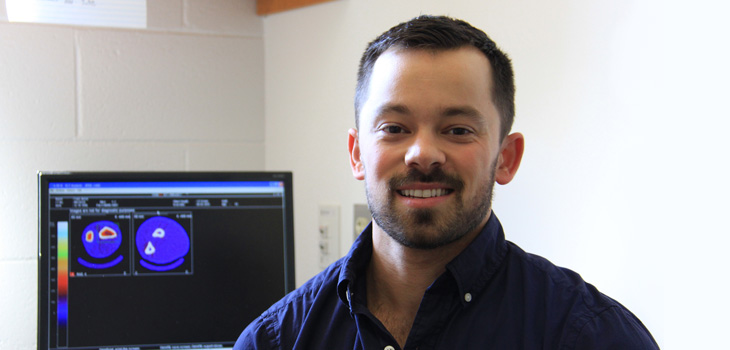
Joseph Kindler, a doctoral candidate at UGA’s College of Family and Consumer Sciences’ department of foods and nutrition, worked with colleagues to examine the geometry of bones. As indicated in the December 21, 2015 news release, “Their investigation revealed that although…muscle was a strong contributor to bone growth throughout childhood and adolescence…this relationship may differ in children with greater body fat.”
“The excess fat that accompanies obesity can be deposited within the muscle. There is emerging evidence that suggests this fat within the muscle may have an effect on how the bone grows, according to the review. Understanding how excess fat, specifically that within the muscle, can influence the muscle and bone relationship in children is still under investigation, but there is clearly a connection, ” Kindler said.
“One of our major goals is to understand how obesity-related conditions, like the progression of Type 2 diabetes, can influence muscle and bone growth in children, ” Kindler added.
Author
React:
Discussion
This is a fascinating development. In my practice we've seen similar outcomes with the revised protocol. The key differentiator seems to be patient selection criteria. Has anyone else noticed the correlation with BMI thresholds?
Great point. I'd push back slightly on the conclusion, the sample size in the cited study is too small to draw population-level inferences. That said, the directional signal is compelling and worth a larger RCT.
We implemented a similar approach last year. Early results are promising but we're still gathering 12-month follow-up data. Happy to share our protocol if anyone is interested.
Join the conversation
Orthopedic professionals are discussing this. Sign in and upgrade to read every comment and add your voice.