
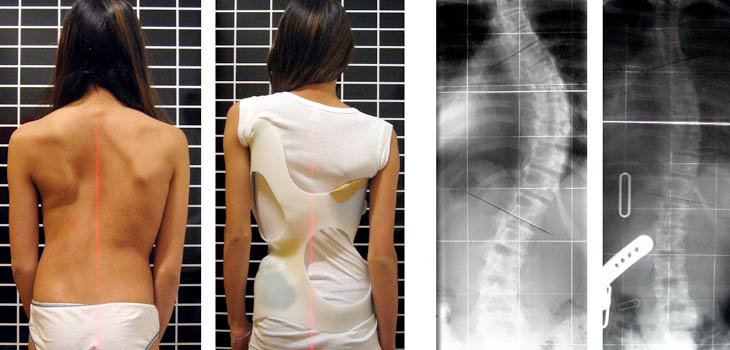
Screening, diagnosis, treatment…earlier is better when it comes to adolescent idiopathic scoliosis. According to the January 13, 2016 news release, “A 2013 multicenter National Institutes of Health (NIH)-funded study, Bracing in Adolescent Idiopathic Scoliosis Trial (BrAIST), documented significant success in preventing spinal curve progression and surgery in children who were screened, diagnosed, and treated with a custom brace.” Now, there are official recommendations.
New Official Statement on Adolescent Idiopathic Scoliosis
2 min read Premium comments
Secondary
“Screening for the Early Detection of Idiopathic Scoliosis in Adolescent, ” is a joint statement between the American Academy of Orthopaedic Surgeons (AAOS), the American Academy of Pediatrics (AAP), the Pediatric Orthopaedic Society of North America (POSNA) and the Scoliosis Research Society (SRS).
“The BrAIST study provided high quality evidence that bracing for adolescent idiopathic scoliosis can decrease the rate of progression of spinal curve to the surgical level, ” said M. Timothy Hresko, M.D., co-author of the revised statement, in the January 13, 2016 news release. “Early detection of scoliosis is essential to identifying patients who may benefit from the use of a spinal brace. The new, 2016 joint position statement—released jointly by four prominent child health organizations—reflects the importance of early scoliosis detection.”
“According to the news release, the new recommendations include: Screening examinations for spine deformity be part of medical home preventive care visits for girls at age 10 and age 12; for boys, once at age 13 or 14. Screening programs have well-trained personnel who can appropriately administer forward bending tests, and the use of a scoliometer, to correctly measure and identify abnormal spine curvature, and to refer patients for additional tests and imaging as needed. Any imaging tests adhere to the principles of ALARA (As Low as Reasonably Achievable) standards to minimize radiation exposure in young patients. Bracing is an effective non-operative intervention to reduce the risk of progression to surgical treatment.”
Dr. Hresko told OTW, “Orthopedic surgeons have noticed that early diagnosis of scoliosis has not been emphasized by primary care physicians, something that has led to misinformation about scoliosis. It was important to reemphasize that brace treatment has been proven to decrease the likelihood of progression to the level where surgery was required. A delay in diagnosis is harmful in that early treatment would not be available to the patient. It is important that we have early recognition by primary care physicians, coaches, physical therapists, and nurses who are seeing children on a regular basis. In addition, the present guidelines of the U.S. preventive services task force has not supported general population screening for scoliosis; however, those guidelines were not meant to be used in the primary care world. It was important to really emphasize the importance of early diagnosis of scoliosis.”
“The most important thing to know about this is that there is agreement amongst orthopedic surgeons, pediatric orthopedic spinal surgeons, and pediatricians that early diagnosis is an important aspect of care of adolescents who may have scoliosis. We all want our adolescents to have the best care possible and scoliosis prevention is a proactive means of improving healthcare.”
React:
Discussion
This is a fascinating development. In my practice we've seen similar outcomes with the revised protocol. The key differentiator seems to be patient selection criteria. Has anyone else noticed the correlation with BMI thresholds?
Great point. I'd push back slightly on the conclusion, the sample size in the cited study is too small to draw population-level inferences. That said, the directional signal is compelling and worth a larger RCT.
We implemented a similar approach last year. Early results are promising but we're still gathering 12-month follow-up data. Happy to share our protocol if anyone is interested.
Join the conversation
Orthopedic professionals are discussing this. Sign in and upgrade to read every comment and add your voice.