
Forbes magazine has come out with its fifth annual “30 Under 30” list, a montage of leaders in all fields who are—and will continue to—make a major impact on their respective fields. Standing tall on that list is Chris Murawski, a medical student at the University of Pittsburgh. Murawski, who has published 52 articles in peer-reviewed journals, is on track to become an orthopedic surgeon. His areas of interest? Feet, ankles, and knees.
Forbes Recognizes Rock Star Orthopedic Surgeon-To-Be
2 min read Premium comments
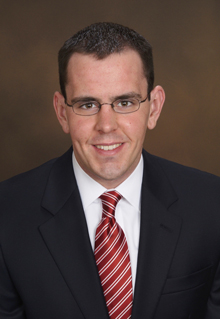
Murawski told OTW, “It’s an incredibly exciting time in healthcare, and it’s an honor to be included among such a distinguished group of individuals. I look forward to collaborating with this group during what is a revolutionary time in medicine, and it’s stimulating to envision what may lie ahead.”
Asked what research he is most proud of, Murawski noted, “Research is a team sport, and any recognition given to one individual is really an acknowledgement of the hard work done by an entire group of dedicated people. Collaborating and witnessing the building blocks that come together for any particular study is rewarding. With that said, I am proud of all of the research that I’ve been fortunate to play a part in because it has provided opportunities to work on great teams from all over the world, with incredible mentors. Regardless of the project, it’s exciting to know the work that has been done may in some way contribute to improving patient care.”
“My interest in the lower extremity came from my own ankle injury playing baseball in high school, for which I ultimately required surgery. Although it sounds like a terrible joke, I suppose it’s not wrong to say that I ‘fell’ on this passion.”
Asked about his thoughts on medical training, Murawski told OTW, “It’s crucial to surround yourself with a group of mentors who are supportive, as well always willing to constructively criticize and offer direction. In this regard, Drs. Freddie Fu, MaCalus Hogan, Volker Musahl and Brian Klatt at the University of Pittsburgh and Dr. John Kennedy at Hospital for Special Surgery have all gone, and continue to go, above and beyond in training the next generation of orthopaedic surgeons. I am grateful for them and am keenly aware of the opportunities that they have provided me.”
Author
React:
Discussion
This is a fascinating development. In my practice we've seen similar outcomes with the revised protocol. The key differentiator seems to be patient selection criteria. Has anyone else noticed the correlation with BMI thresholds?
Great point. I'd push back slightly on the conclusion, the sample size in the cited study is too small to draw population-level inferences. That said, the directional signal is compelling and worth a larger RCT.
We implemented a similar approach last year. Early results are promising but we're still gathering 12-month follow-up data. Happy to share our protocol if anyone is interested.
Join the conversation
Orthopedic professionals are discussing this. Sign in and upgrade to read every comment and add your voice.