
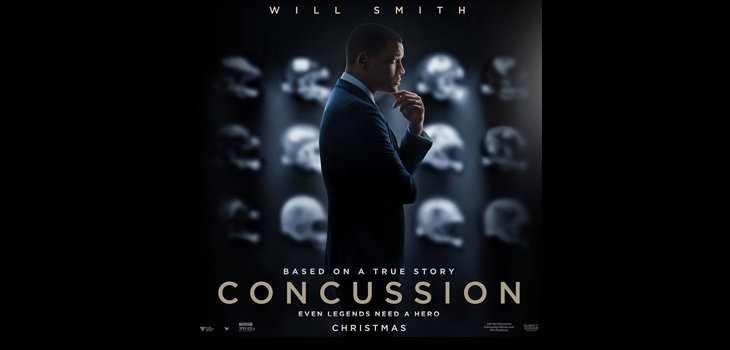
Orthopedists, or at least some of them, are hoping that the movie “Concussion” will command the attention of parents of young football players. The movie tells the story of the Nigerian-born forensic pathologist, Bennett Omalu, M.D., who discovered that blows to the head, if continued over time, can cause long-term bad effects for players of games such as football.
Concussion Movie Is Real Deal, Says Sports Medicine Doc
1 min read Premium comments
Secondary
It was Omalu who discovered that football player Mike Webster’s brain had deteriorated due to off-repeated blows to his head while playing football. Webster, who played as a center in the National Football League from 1974 to 1990 with the Pittsburgh Steelers and Kansas City Chiefs, dropped dead at age 50. It was Omalu who named Webster’s injury “chronic traumatic encephalopathy (CTE).”
Michael Miller, M.D., a concussion specialist and the medical director of sports medicine at St. Elizabeth Health Care was quoted by Cincinnati.com writer Chris Graves as expressing hope that the film will prompt dialogue among children who want to play in organized athletics and their parents.
Graves writes that “the film is a stark reminder to the potential danger of sports-related concussions.” And the problem posed by what seems to be “insurmountable opposition in the form of the Almighty Dollar.”
Omalu, Graves writes, is the real deal. His work demonstrated that money and power cannot overcome science. It illustrates that bravery wins over bullying, that money can’t always buy science. The real message of the movie, he writes, is that truth, in the end, still wins.
Author
React:
Discussion
This is a fascinating development. In my practice we've seen similar outcomes with the revised protocol. The key differentiator seems to be patient selection criteria. Has anyone else noticed the correlation with BMI thresholds?
Great point. I'd push back slightly on the conclusion, the sample size in the cited study is too small to draw population-level inferences. That said, the directional signal is compelling and worth a larger RCT.
We implemented a similar approach last year. Early results are promising but we're still gathering 12-month follow-up data. Happy to share our protocol if anyone is interested.
Join the conversation
Orthopedic professionals are discussing this. Sign in and upgrade to read every comment and add your voice.