
Benvenue Medical, Inc. announced on January 6, 2016 that is has completed a $60 million round of financing.
Benvenue Medical Raises $60 Million
1 min read Premium comments
Secondary
The spine company said it will use the funds to accelerate U.S. commercialization activities for its two minimally invasive products—the Luna 3D Interbody Fusion System for treating degenerative disc disease and the Kiva VCF Treatment System for treating vertebral compression fractures (VCFs).
The financing consists of $23 million in equity and $37 million in debt. The equity was provided by DeNovo Ventures, Domain Associates, Esquilime Partners, InterWest Partners, Technology Partners and Versant Ventures. The debt was provided by CRG. Donald Miller, co-founder and managing director of Versant Ventures will join Benvenue’s board of directors.
Interbody Fusion and VCF Treatment Systems
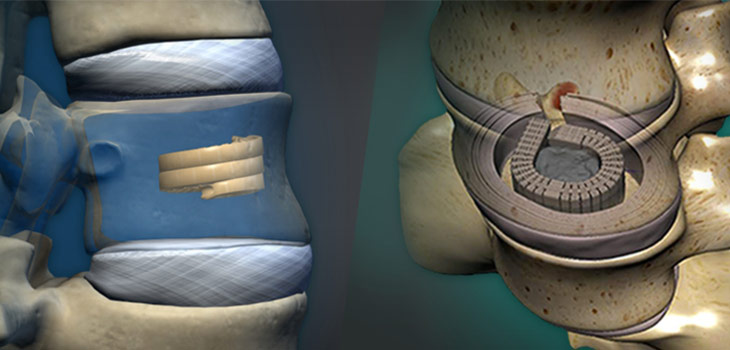
The company says the Luna 3D Interbody Fusion System is designed to provide the “least minimally invasive approach” to lumbar spinal fusion while “providing spine surgeons control and flexibility in implantation.” The system was cleared by the FDA in November 2014. The system features a small profile PEEK implant designed to expand in three dimensions within the disc space “allowing surgeons to restore height via a posterior approach while providing the stability of a larger construct more often associated with an anterior approach.”
The Kiva VCF Treatment System, a cylindrical implant for spinal fractures, uses expandable technology to create structural support for the vertebral body and a reservoir to direct and contain bone cement. The Kiva system was also cleared by the FDA in 2014. The system, says the company, was proven in a randomized, controlled study published in Spine “to restore kyphotic angle and reduce the rate of adjacent level fractures vs. balloon kyphoplasty—with added economic benefits.”
The company, founded in 2004, is privately held and funded by the venture capitalists noted above.
Author
React:
Discussion
This is a fascinating development. In my practice we've seen similar outcomes with the revised protocol. The key differentiator seems to be patient selection criteria. Has anyone else noticed the correlation with BMI thresholds?
Great point. I'd push back slightly on the conclusion, the sample size in the cited study is too small to draw population-level inferences. That said, the directional signal is compelling and worth a larger RCT.
We implemented a similar approach last year. Early results are promising but we're still gathering 12-month follow-up data. Happy to share our protocol if anyone is interested.
Join the conversation
Orthopedic professionals are discussing this. Sign in and upgrade to read every comment and add your voice.