
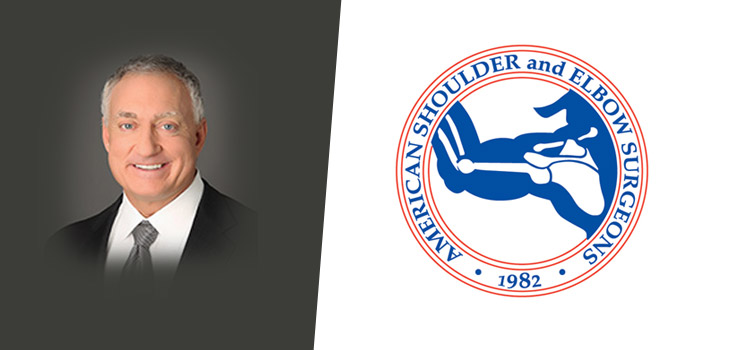
Renowned orthopedic surgeon, Anthony Romeo, M.D., has been selected to be President of the American Shoulder and Elbow Surgeons (ASES) from 2017-2018. He will serve as president-elect from October 2016 to October 2017. Anthony Romeo, M.D. is an orthopedic surgeon at Midwest Orthopaedics at Rush. He is also professor of Orthopaedic Surgery at Rush University Medical Center, and director of the Section of Shoulder & Elbow. He also serves as co-team physician for the Chicago White Sox and the Chicago Bulls.
Anthony Romeo, M.D. to Head ASES
2 min read Premium comments
Secondary
Dr. Romeo told OTW, “I am honored to be entrusted with the future stewardship of this organization. I will enjoy my four years on the ASES executive committee, and will do my utmost to continue to foster the respect and prestige of the society.”
Commenting on his plans as a member of the ASES executive committee, Dr. Romeo noted, “We are expanding the membership to include a new category, namely, that of ‘candidate member.’ This will allow younger members of our profession to get involved in the organization at an earlier time in their careers. In the past, ASES was an austere society that required new members to wait two-seven years before they were given the opportunity to become full members. Ideally, two years after someone is board certified they would be eligible to apply to become an associate member.”
“The first candidate members will be accepted in October 2016, and we anticipate additional interest as the word gets out about this opportunity. The American Shoulder and Elbow Surgeons society has the opportunity to offer greater in-depth scholarly pursuits regarding shoulder and elbow surgery…particularly as it concerns more complex and reconstructive procedures. This includes, for example, reverse shoulder arthroscopy, with most of the work done to date emanating from the ASES.”
“One of my primary goals will be to ensure that young surgeons in the ASES understand that we are genuinely interested in their ideas, and that we want to create opportunities for them to share those ideas. They should not have to wait five-ten years to get on the podium. They should feel welcomed and encouraged by senior level surgeons to actively participate in our organization.”
As co-team physician for the Chicago White Sox and the Chicago Bulls, Dr. Romeo contributes greatly to his local community. He is also keenly aware of the world beyond the U.S. He stated, “During my tenure as president I want to create even more international collaboration between shoulder surgeons. I am blessed to have had the opportunity to work with numerous talented surgeons from around the world. I want my presidency to have a strong international flavor; my message is, ‘The world is flat and shoulder and elbow innovation comes from all corners of the globe.”
Author
React:
Discussion
This is a fascinating development. In my practice we've seen similar outcomes with the revised protocol. The key differentiator seems to be patient selection criteria. Has anyone else noticed the correlation with BMI thresholds?
Great point. I'd push back slightly on the conclusion, the sample size in the cited study is too small to draw population-level inferences. That said, the directional signal is compelling and worth a larger RCT.
We implemented a similar approach last year. Early results are promising but we're still gathering 12-month follow-up data. Happy to share our protocol if anyone is interested.
Join the conversation
Orthopedic professionals are discussing this. Sign in and upgrade to read every comment and add your voice.