
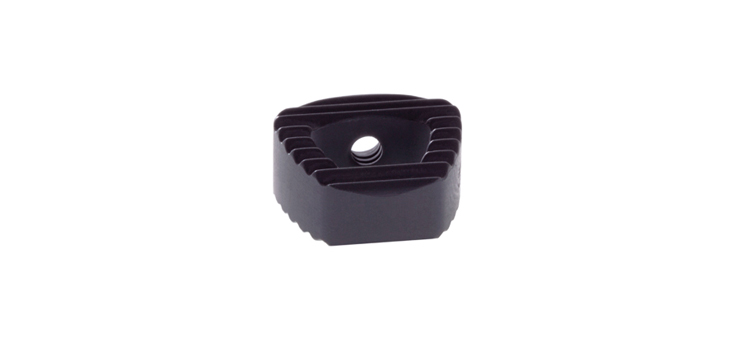
Amedica Corporation has just announced the release of its Valeo II C interbody fusion device system, a product made entirely of Amedica’s micro composite silicon nitride biomaterial.
Amedica Releases Valeo II C Interbody Fusion Device
2 min read Premium comments
Secondary
“We are very excited to supplement this innovative product line with an additional second generation interbody offering, ” said Sonny Bal, M.D., chairman and CEO of Amedica Corporation, in the January 25, 2016 news release. “Because of silicon nitride’s unique imaging and osteointegration properties and the improved design, surgeons are able to assess fusion more effectively and earlier in the healing process. The feedback received from our limited release has been extremely positive and very encouraging for our vision of the widespread adoption of silicon nitride as the ideal material for spine fusion.”
As indicated in the new release, the product “offers a slim-profile design which improves intraoperative visibility for more exact placement and postoperative visibility, providing better assessment of successful fusion. The new design also includes directional teeth to resist expulsion, an anterior thread connection for improved inserter stability, and a 14x12mm footprint size for smaller patients. Accompanying the revised implants are new consolidated, single-level instrumentation sets with improved ergonomics and ease of use. The Valeo II C interbody fusion device is made of micro composite silicon nitride biomaterial, which offers a favorable environment for bone growth and osteointegration, when compared to competitive PEEK and titanium offerings. Valeo II silicon nitride interbody fusion devices are also semi-radiolucent with clearly visible boundaries in x-rays and produce no artifacts under MRI or CT scans. The combination of these properties is found only in Amedica’s silicon nitride biomaterial technology.”
“As I began using the second generation Amedica silicon nitride cervical interbody in my first few cases, it become very evident to me the ease of use this system offers, as well as the clinical benefits my patients were experiencing over allograft, ” said David M. Jones, M.D., Piedmont Neurosurgery and Spine, Hickory, North Carolina. “The new innovative design coupled with this unique biomaterial can revolutionize spinal fusion procedures, and ensure a level of inter-operative and post-operative accuracy that is unparalleled today.”
Asked about the development process, Dr. Bal told OTW, “We gained and learned by working closely with our consulting surgeons to develop a novel design that has even better imaging and fusion assessment capabilities compared our first generation cervical interbody fusion device. Surgeon input was vital, and the most rewarding thing about the development process. To develop a design with as much market acceptance as we are witnessing is a great win for Amedica.”
“We anticipate continued success with our second generation silicon nitride cervical interbody. Because this product provides surgeons with an improved delivery and implantation system, coupled with a biomaterial that favors bone growth directly into the device surface, we expect this product to drive further adoption of our proprietary silicon nitride technology. Our data show that unlike any competitive implant material, silicon nitride undergoes transformation to a bioactive substrate when exposed to physiologic fluids, showing anti-infective behavior, while favoring stem cell adhesion and bone healing.”
Author
React:
Discussion
This is a fascinating development. In my practice we've seen similar outcomes with the revised protocol. The key differentiator seems to be patient selection criteria. Has anyone else noticed the correlation with BMI thresholds?
Great point. I'd push back slightly on the conclusion, the sample size in the cited study is too small to draw population-level inferences. That said, the directional signal is compelling and worth a larger RCT.
We implemented a similar approach last year. Early results are promising but we're still gathering 12-month follow-up data. Happy to share our protocol if anyone is interested.
Join the conversation
Orthopedic professionals are discussing this. Sign in and upgrade to read every comment and add your voice.