
On December 15, 2015, Spine published Aesculap Implant Systems, LLC’s 24-month primary endpoint outcomes of its activL artificial disc in comparison to predicate lumbar total disc replacement designs.
Aesculap’s Lumbar Disc Goes Head-to-Head With ProDisc and Charité
1 min read Premium comments
Secondary
The paper, “Lumbar Total Disc Replacement for Discogenic Low Back Pain: Two-year Outcomes of the activL Multicenter Randomized Controlled IDE Clinical Trial, ” by Garcia, R. Jr., et al., found the disc, “to be highly effective in the treatment of discogenic low back pain.”
The company said this is the first FDA approved disc with head-to-head evidence from an IDE (investigational device exemption) study that compared results with another disc instead of fusion controls. The IDE trial was a non-inferiority trial. Surgeons in the study were able to implant either ProDisc-L or Charité as the control device based on technique preference. The previous lumbar total disc replacement IDE trials against fusion have shown favorable outcomes.
The trial found the activL disc to be non-inferior to the control devices in the primary composite endpoint (P < 0.001). Also, in a protocol-defined analysis the disc was found superior (P = 0.02) due largely in part of the range of motion component of the primary composite endpoint.
Glenn Buttermann, M.D., of the Midwest Spine and Brain Institute in Stillwater, Minnesota, an investigator on the activL IDE trial and co-author of the publication said, “Evidence like this is important to help motion preservation surgeons like myself defend our position with payers and increase our qualified patients’ access to motion preservation surgery.”
The publication is the first of the outcomes the company expects from the anticipated activL IDE trial, which will continue to seven-year follow-up.
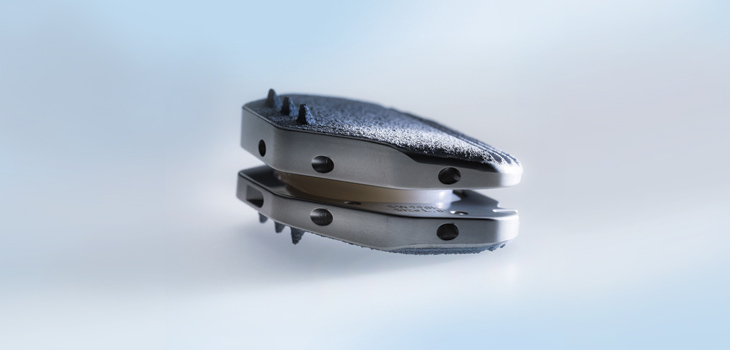
The disc features cobalt chromium endplates which affix to the patient’s vertebrae with bone-sparing spikes for initial stabilization. According to the company, this is the first lumbar artificial disc with a mobile ultra-high molecular weight polyethylene core that supports both controlled translational and rotational movement similar to the movement of the healthy lumbar spine.
Author
React:
Discussion
This is a fascinating development. In my practice we've seen similar outcomes with the revised protocol. The key differentiator seems to be patient selection criteria. Has anyone else noticed the correlation with BMI thresholds?
Great point. I'd push back slightly on the conclusion, the sample size in the cited study is too small to draw population-level inferences. That said, the directional signal is compelling and worth a larger RCT.
We implemented a similar approach last year. Early results are promising but we're still gathering 12-month follow-up data. Happy to share our protocol if anyone is interested.
Join the conversation
Orthopedic professionals are discussing this. Sign in and upgrade to read every comment and add your voice.