
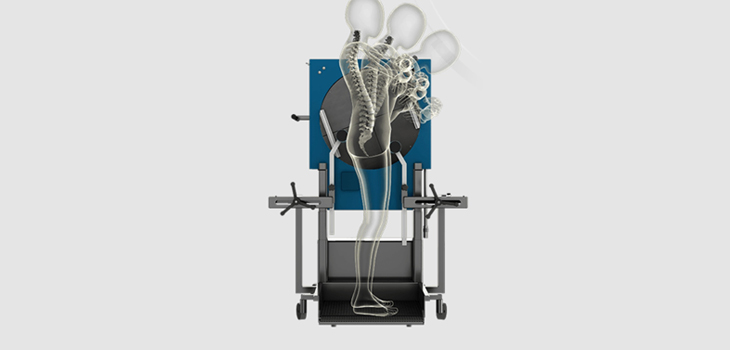
Austin, Texas-based Ortho Kinematics‚ Inc., has raised another $4 million in debt financing to expand commercialization of the company’s VMA (Vertebral Motion Analysis), a machine which performs diagnostic radiographic assessments of spinal motion instability. Last April the company announced the close of $9.6 million in Series C equity financing.
$4 Million in Debt Financing for Ortho Kinematics
1 min read Premium comments
Secondary
The debt financing was completed amongst current Ortho Kinematics investors and largely led by TEXO Ventures, as well as other previous investors. Terms of the financing were not disclosed.
Seattle-based spine neurosurgeon, Richard Wohns, M.D., founder of NeoSpine, said patients benefit from improved diagnostic capabilities. “The VMA provides the biomechanical insight we have not had in the past. This advanced clinical information can impact diagnostic and treatment decisions.” Spine surgeon Reginald Davis, M.D., said the VMA provides the clinical information of traditional X-rays, as well as “tremendous biomechanical insight from motion analysis that can impact diagnostic and treatment decisions. To improve spine care, diagnostic capabilities must also improve.”
The company says it has commercially tested over 4, 000 patients with the technology and seen a recent uptick in sales. Margie Hans was recently appointed as director of reimbursement and health policy. The VMA uses standard C-arms (fluoroscopes) to generate images for FDA-cleared lumbar and cervical indications and is covered under category I CPT codes.
Paul Gunnoe, the company’s CEO, said the debt financing is a strong vote of confidence by current shareholders. “We have ambitious plans in 2016 and this additional financing provides us a strong cash position and the resources to support those plans. The VMA test is a disruptive diagnostic technology that allows us to position ourselves as leader in the spine industry.”
Author
React:
Discussion
This is a fascinating development. In my practice we've seen similar outcomes with the revised protocol. The key differentiator seems to be patient selection criteria. Has anyone else noticed the correlation with BMI thresholds?
Great point. I'd push back slightly on the conclusion, the sample size in the cited study is too small to draw population-level inferences. That said, the directional signal is compelling and worth a larger RCT.
We implemented a similar approach last year. Early results are promising but we're still gathering 12-month follow-up data. Happy to share our protocol if anyone is interested.
Join the conversation
Orthopedic professionals are discussing this. Sign in and upgrade to read every comment and add your voice.