
We Must Change Training for Global Trauma
Trauma Training Must Change for Global Care // Rothman’s Bensalem Hospital: Best for VBP // and More!
7 min read Premium comments
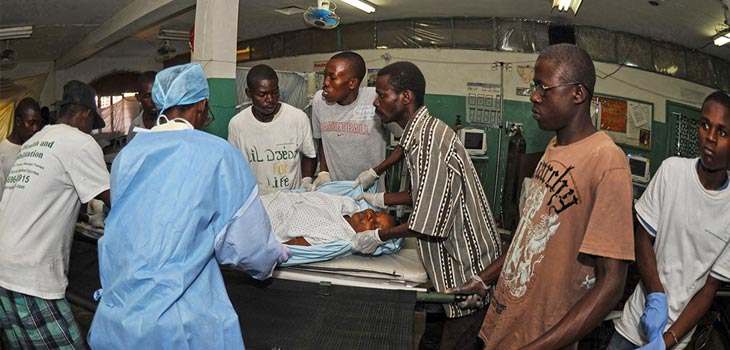
Not many would attempt to change the government. A few brave orthopedic traumatologists are doing just that, however.
Andrew Pollak, M.D. is chief of Orthopaedics for the University of Maryland Medical System and a past president of the Orthopaedic Trauma Association (OTA). He told OTW, “Around the world, trauma kills more people than HIV, malaria, and tuberculosis combined! Even more astoundingly, the number of people who sustain permanent disability as a result of traumatic events is between ten and fifty times greater than the number of people who lose their lives. To address this scourge, we must effectuate a change in how we fund international medical programs. In essence, we are asking that the U.S. government make room for orthopaedic surgical treatment.”
“Our proposed initiative—The Orthopaedic Trauma Care Specialist (OTCS) program—is a two-year residency that would focus primarily on the management of orthopaedic trauma, and would address the specific needs of the country in question.”
“Our experience in responding to global disasters has been that in many developing countries there are outstanding medical schools that are graduating doctors who are ready to begin residency training. But there are no residency programs. As a result, these doctors often go to other countries such as France or elsewhere in Europe to gain superb experience, and then decide not to return to their home countries.”
“For the most part, traditional orthopaedic residency training prepares people to do things that are completely irrelevant in the developing world. Shoulder arthroscopy, for example, is a first world procedure. Many hospitals and accident wards in the developing world are overwhelmed with trauma patients—as opposed those who need a hip replacement for arthritis. Our silos of American medicine are not a good fit for these low and middle income countries, and we need to develop a program that would allow people to be trained in a shorter period of time—and trained for conditions that effect their communities.”
“One such issue in many countries is road traffic accidents. Part of the problem is that traffic signals appear far less quickly than roadways appear. People are being injured and taken to centers that have no capacity to care for them. A femur fracture is splinted and elevated without adequate reduction or surgical stabilization often leading to prolonged or permanent disability. One might say that this is a real crime given that operative care can be taught simply and lead to almost zero long term disability.”
“We have submitted our proposals to the U.S. Agency for International Development and the Centers for Disease Control and Prevention. The problem is that they are not used to the model; they are accustomed to models that address HIV, etc., not surgical care. If we obtain funding, the next step will be to define our partners. We have already identified our partners in Haiti, and we will define other partners and build relationships in other countries (perhaps Botswana or Nigeria).”
“Trauma is a major threat to the economies of the developing world. And the OTCS would be a launching pad that could create other graduate medical education programs such as emergency maternal and obstetric care. There are many opportunities here to advance care and make a major impact on the lives of millions of people worldwide.”
Rothman Orthopaedic Specialty Hospital Wins Major Award
Rothman Orthopaedic Specialty Hospital (ROSH) in Bensalem, Pennsylvania, has been “crowned” best hospital for Value Based Purchasing (VBP) by the Centers for Medicare & Medicaid Services (CMS). Commenting on this honor is Alexander R. Vaccaro, M.D., Ph.D., MBA, president and Richard H. Rothman Professor and Chairman of the Department of Orthopaedic Surgery at the Rothman Institute.
Asked how ROSH provides such high quality healthcare, Dr. Vaccaro told OTW, “High quality healthcare is the ability to apply evidence based practice to the health services we provide in order to achieve favored outcomes. This innovation begins with the surgeons at the Rothman Institute and is replicated at the Rothman Orthopaedic Specialty Hospital by the devoted providers. ROSH structures this approach on a framework that focuses on efficiency, high quality, and cost containment.”
“Efficiency is measured through interactive care and tracked with the patient navigation process. At each interval, a dedicated nurse navigator guides the patient through their entire episode of care which starts 30 days prior to surgery and continues 90 day post operatively. Efficiency is also measured through the structure of the facility. The model for ROSH includes a team of professionals that stay well-informed in the discipline of orthopaedic care. By working together they create a system of care that functions in unison rather than individually.”
“Quality is measured through the strategic use of big data and information technology. Collaborating with entities like Harvard Business School, ROSH use business analytics to evaluate trends and discover opportunities for improvement and cost management. FORCE Therapeutics is a system that allows us to track patient progress through rehabilitation and OBERD [outcomes based electronic research database] collects the necessary data to analyze detailed information about patient outcomes over an extended period of time. Frequent review of patient satisfaction scores provides the necessary feedback in evaluating our processes. Focusing solely on orthopaedics affords us the ability to synthesize data quickly and respond to all deviations.”
“Cost containment in the facility is managed through several different methods. For one, ROSH empowers the staff to recognize inefficiencies and waste. This allows for a cooperative team approach where everyone works towards a unified goal. As a part of a local consortium ROSH meets with like facilities to discuss contracting, best practices, and price investigation. Big data and technology are also utilized in cost containment. ROSH was an integral part in developing a targeted software application used for case cost accounting.”
“This framework provides a solid foundation for continued success in orthopaedic care. By constantly evaluating these areas ROSH maintain the highest quality of healthcare services.”
As for how ROSH’s value-based purchasing efforts stand out from the crowd, Dr. Vaccaro noted, “ROSH is the only orthopaedic-specific specialty hospital in the region. By being specialty specific we are better positioned to improve quality, patient satisfaction and efficiency than most other hospitals. The robust orthopaedic clinical research performed by the Rothman Institute surgeons allows us to continually develop evidence based best practices and establish the standards and protocols to monitor and improve outcomes, satisfaction and efficiency thru our data systems.”
“ROSH will continue to monitor and improve established practices and processes. Through structured performance improvement plans a robust quality program will continue to guide future health care services. Understanding that a targeted focus on high quality does not translate to higher cost, ROSH will coordinate a deliberate approach to maintaining the existing model. We continue to build our data base which will allow us to further develop predictive modeling to improve quality, patient satisfaction and cost. This will also provide for enhanced care coordination for every patient who is operated on at ROSH.”
Neel Anand, M.D. Awarded Best Paper at SMISS
Neel Anand, M.D., M.Ch.Orth., director of Spine Trauma at the Cedars-Sinai Spine Center, has been honored with the Global Forum Best Paper Award by the Society for Minimally Invasive Spine Surgery (SMISS). Dr. Anand tells OTW, “While circumferential minimally invasive surgical correction (CMIS) for adult spinal deformity (ASD) is getting popular, predictors for outcomes have not been well studied. My team and I noticed that some patients were not getting optimum functional results so we set out to study them. Using our extensive database, we posed the questions, ‘Is there a major difference between ten of the best patients and ten of the worst?’ and ‘If so, what is the difference?’ Because the Oswestry Disability Index (ODI) is a marker of postoperative disability, we selected the best and worst ODIs and looked at factors such as BMI [body mass index], diabetes, etc. All of them showed no difference. You’re not operating on someone who is in a very bad state, so there is some selection bias.”
“The ten best patients had significantly lower preoperative ODI and Visual Analog Scale [VAS], fewer complications and lower incidence of postoperative pseudoarthrosis. A full 80% of the patients in the worst outcome group were operated on before 2011. Patient factors (age, sex, depression, diabetes, BMI, smoking) and baseline deformity (COBB angle, AVT, Coronal Balance, SVA, PI-LL mismatch) were not statistically significant.”
“We found that the complication rate was significantly higher in those with the worst ODI (as expected). Six out of ten worst patients experienced major complications, of which four had pseudoarthrosis (nonunion). Nine of the ten patients with worst outcomes underwent surgery before 2011, which is likely an indication of our learning curve for this procedure. We used to do a lateral transpsoas fusion at L4-L5, then an AxiaLIF followed by the insertion of posterior pedicle percutaneous screws. We were not getting optimal sagittal balance when using the AxiaLIF for L5-S1, and we started recognizing that we were getting late nonunions with AxiaLIF. That is why in 2011 we stopped using it and began using ALIF.”
“In addition, instead of going through the psoas muscle, we began to go in anterior to the psoas. There were a small number of patients (1-3%) who experience lumbar plexus issues with the transpsoas approach, so we changed the approach to go ante-psoas thereby avoiding going through the substance of the psoas muscle but rather started going anterior to the psoas with an oblique trajectory.”
“I would like to give credit to two medical students who gave their all to this project: Ryan and Jason Cohen, twin brothers who dedicated their time, effort and passion towards this study.”
React:
Discussion
This is a fascinating development. In my practice we've seen similar outcomes with the revised protocol. The key differentiator seems to be patient selection criteria. Has anyone else noticed the correlation with BMI thresholds?
Great point. I'd push back slightly on the conclusion, the sample size in the cited study is too small to draw population-level inferences. That said, the directional signal is compelling and worth a larger RCT.
We implemented a similar approach last year. Early results are promising but we're still gathering 12-month follow-up data. Happy to share our protocol if anyone is interested.
Join the conversation
Orthopedic professionals are discussing this. Sign in and upgrade to read every comment and add your voice.