
Talk about advanced warning! Scientists from the Kennedy Institute of Rheumatology at Oxford University have found a marker that can tell you whether you might eventually have rheumatoid arthritis (RA)…and it can tell you this information even 16 years before the condition takes effect! Specifically, the team found that a blood test that looks for antibodies that recognize the protein tenascin-C could reliably predict who will get RA.
RA Marker Informs You 16 Years Before Disease Arises
2 min read Premium comments
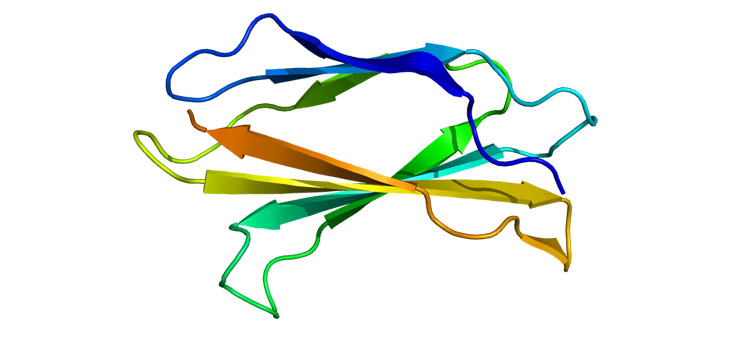
Secondary
As indicated in the December 10, 2015 news release, “When inflammation occurs in the body, some proteins are altered in a process called citrullination. These altered forms can prompt an immune response from the body, which can see it turning antibodies on itself—causing rheumatoid arthritis. For that reason, tests that spot antibodies to citrullinated proteins are already used to diagnose the disease. While tests for individual proteins usually have a relatively low diagnostic sensitivity, a more general test called CCP, that detects synthetic citrullinated peptides, identifies a lot more RA cases.”
Lead researcher Dr. Anja Schwenzer said, “We knew that tenascin-C is found at high levels in the joints of people with RA. We decided to see if it could be citrullinated and, if so, whether it was a target for the autoantibodies that attack the body in RA. That might also indicate whether it could be used in tests to indicate the disease.”
“When we looked at results from more than 2, 000 patients we found that testing for antibodies that target citrullinated tenascin-C (cTNC) could diagnose RA in around 50% of cases, including some cases not identified by CCP. It also has a very low rate of false positives—it is 98% accurate at ruling out RA.”
Dr. Schwenzer told OTW, “In a large number of rheumatoid arthritis patients, autoantibodies bind to proteins that harbour a specific modification termed citrullination. In order to improve diagnosis and treatment of rheumatoid arthritis it is important to identify the proteins that are attacked by these antibodies. We knew that the protein tenascin-C, which is usually absent in healthy tissue, can be found at high levels in the inflamed joints of people with rheumatoid arthritis. We decided to see if it could be citrullinated and, if so, whether it was a target for the autoantibodies that attack the body in rheumatoid arthritis. That might also indicate whether it could be used in tests to indicate the disease.”
“We found that antibodies against citrullinated tenascin-C are associated with an increased disease activity in rheumatoid arthritis. It is also known that these kind of antibodies correlate with poor prognosis and progressive joint destruction, and that these patients often require more aggressive treatment.”
Author
React:
Discussion
This is a fascinating development. In my practice we've seen similar outcomes with the revised protocol. The key differentiator seems to be patient selection criteria. Has anyone else noticed the correlation with BMI thresholds?
Great point. I'd push back slightly on the conclusion, the sample size in the cited study is too small to draw population-level inferences. That said, the directional signal is compelling and worth a larger RCT.
We implemented a similar approach last year. Early results are promising but we're still gathering 12-month follow-up data. Happy to share our protocol if anyone is interested.
Join the conversation
Orthopedic professionals are discussing this. Sign in and upgrade to read every comment and add your voice.