
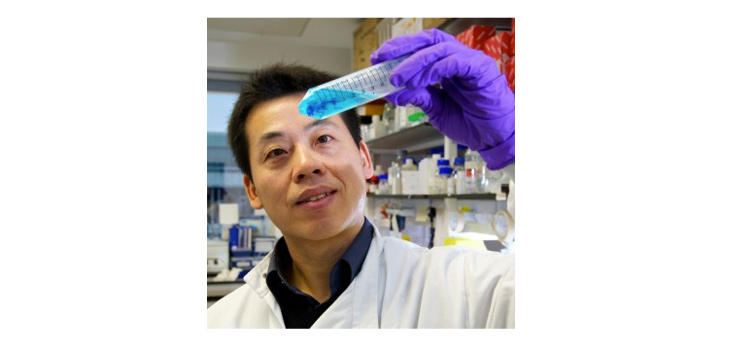
Tick tock OW! A researcher from the UK has made an unusual discovery, namely that osteoarthritis (OA) is linked to the human body clock. Dr. Qing-Jun Meng, a Senior Research Fellow for Arthritis Research UK and a University of Manchester biologist, discovered that chondrocytes control thousands of genes which segregate different biological activities at different times of the day.
OA Linked to Body Clock!
2 min read Premium comments
Secondary
In the December 15, 2015 news release Dr. Meng said: “Despite the best efforts of doctors and scientists, we have a poor understanding of osteoarthritis; sadly, pain relief and joint replacement surgery seem to be the only option for patients. So the prospect of fundamental treatment is very exciting—even though it’s still probably years away.”
Dr. Meng found that the body clock “controls the equilibrium between when chondrocyte cells are repaired during rest and when they are worn down through activity. But his research revealed that as we age, our cartilage cell body clocks deteriorate, making the repair function insufficient, which could contribute to osteoarthritis.”
“But there are other body clock related approaches which can help osteoarthritis sufferers: eating and exercising at set regular times each day is also something we think is a good idea. Using heat pads that approximate body temperature changes in cartilage tissue—which are too governed by the body clock—are also potentially useful.”
Dr. Meng told OTW, “We have recently discovered cell autonomous circadian clocks in chondrocytes. These local clocks become dampened with age, and disrupted by inflammatory cytokines, suggesting a role they may play in cartilage health and disease. However, before the current study, definitive evidence for a role of a clock protein in cartilage homeostasis was lacking.”
“We made a conditional knockout mouse in which the cartilage clock rhythm was selectively abolished. Our initial thought was to challenge these mice with a mechanical injury model mimicking osteoarthritis. To do this, we had to make sure there were no baseline changes of cartilage integrity. The joints of these conditional BMAL1 knockout mice developed normally, with no obvious defects up to the age of one month. However, the real surprise came when we observed progressive degeneration and lesions in the articular cartilage of the knee joints from two months onwards. Time course transcriptomic analysis of cartilage revealed thousands of genes that showed time-of-day dependent expression patterns. Loss of the clock factor BMAL1 abolished such patterns for most of the above genes, indicating BMAL1 as a critical modulator for cartilage function.”
React:
Discussion
This is a fascinating development. In my practice we've seen similar outcomes with the revised protocol. The key differentiator seems to be patient selection criteria. Has anyone else noticed the correlation with BMI thresholds?
Great point. I'd push back slightly on the conclusion, the sample size in the cited study is too small to draw population-level inferences. That said, the directional signal is compelling and worth a larger RCT.
We implemented a similar approach last year. Early results are promising but we're still gathering 12-month follow-up data. Happy to share our protocol if anyone is interested.
Join the conversation
Orthopedic professionals are discussing this. Sign in and upgrade to read every comment and add your voice.