
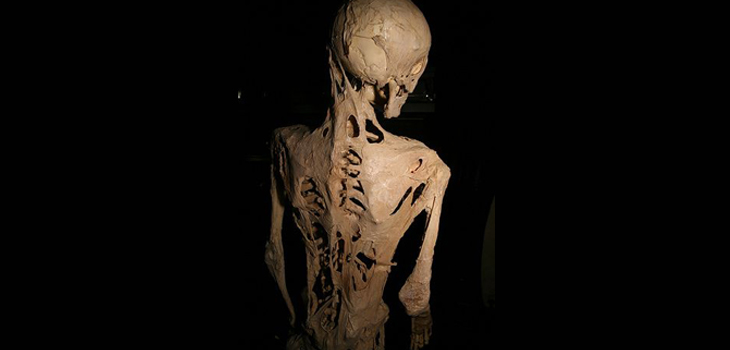
Fibrodysplasia ossificans progressive (FOP), the rare genetic disease where bone is grown within soft tissue, is also known as Stone Man Syndrome. Now, researchers from Japan are delving into the connection between this disease and inflammation.
New Information on How Rare Bone Disease Begins
1 min read Premium comments
Secondary
According to the November 30, 2015 news release, an immune response or trauma triggers the disease. The team from Japan used induced pluripotent stem (iPS) cells to study the disease because they could “take cells from the patient that are unaffected by FOP and then reprogram the cells into soft tissue cells for study.”
Researchers at the Center for iPS Cell Research and Application (CiRA), Kyoto University, reprogrammed FOP patient cells and then sought candidate molecules that could explain how the disease initiates. The researchers focused on bone morphogenetic proteins (BMP).
“There are two popular theories, ” explains Makoto Ikeya, an associate professor at CiRA involved in the study, in the news release. “In one, BMP signaling is always active. In the other, BMP signaling is abnormally strong when activated.”
This team, which also involved CiRA Professor Junya Toguchida, looked at molecules related with inflammation, finding Activin-A as a candidate drug target. “Using iPS cell technology, the scientists found that only cells harboring the FOP gene mutation would respond to Activin-A by significantly increasing their BMP signaling. Further, transplanting these cells into mice and stimulating them with Activin-A led to abnormal bone.”
Professor Toguchida told OTW, “FOP has been a topic of study in our lab for nearly a decade. We had long believed that current theories were incomplete and prevented any useful treatment. This is a very uncommon disease that even many orthopaedic surgeons are unaware of. We hope that our mouse model will be useful for studying an assortment of orthopaedic diseases of ectopic bone.”
“It was surprising to find the clear connection between inflammation and abnormal bone growth. This finding suggests alternative strategies for drug discovery.”
React:
Discussion
This is a fascinating development. In my practice we've seen similar outcomes with the revised protocol. The key differentiator seems to be patient selection criteria. Has anyone else noticed the correlation with BMI thresholds?
Great point. I'd push back slightly on the conclusion, the sample size in the cited study is too small to draw population-level inferences. That said, the directional signal is compelling and worth a larger RCT.
We implemented a similar approach last year. Early results are promising but we're still gathering 12-month follow-up data. Happy to share our protocol if anyone is interested.
Join the conversation
Orthopedic professionals are discussing this. Sign in and upgrade to read every comment and add your voice.