
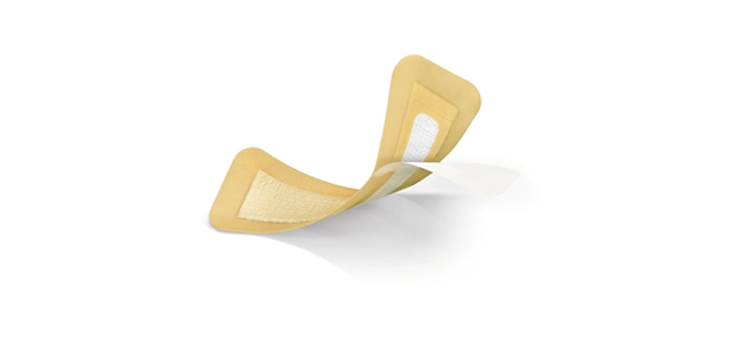
Does the type of wound covering used in joint replacement surgery significantly affect the outcome? According to a study of 262 patients who were randomized to receive either ConvaTec, Inc.’s AQUACEL Ag SURGICAL Cover Dressing or a standard gauze surgical dressing, following knee or hip replacement surgery, it does.
Improved Wound Dressing Speeds Recovery
1 min read Premium comments
Secondary
The trial, conducted at the OrthoCarolina Hip and Knee Center in Charlotte, North Carolina, evaluated the incidence of wound complications in the patients undergoing total joint replacements. Patients were randomized to receive either AQUACEL Ag SURGICAL cover dressing or standard gauze dressing. Standard protocols were followed for wound closure and each dressing was applied to the surgical site in the operating room.
In the standard dressing group, the bandage was removed for wound evaluation on the second day following surgery, and was changed every other day during the hospital stay as needed for wound drainage or other concerns.
In the AQUACEL Ag SURGICAL group, the dressing was allowed to remain in place for seven days and was removed by a home health nurse. The dressing was also changed at the surgeon’s discretion if there were concerns about drainage or healing. All patients were discharged home and visited by trained nurses from a single home health agency three times per week for four weeks. The surgeon or physician’s assistant conducted the final post-operative evaluations at the end of the four-week period.
The study showed a significant reduction in wound complications, a significant reduction in the number of dressing changes and improved patient satisfaction. Patients were more satisfied with their ability to take care of their personal hygiene, to change clothes, and to sit and sleep comfortably.
The AQUACEL Ag SURGICAL cover dressing is an antimicrobial cover dressing that provides a Hydrofiber Technology wound contact layer. According to a company statement, it is designed to protect surgical incisions with a waterproof viral and bacterial barrier that also allows for greater range of motion and comfort following surgery.
The study results were presented as a podium presentation at the closed meeting of the Knee Society in September 2015.
Author
React:
Discussion
This is a fascinating development. In my practice we've seen similar outcomes with the revised protocol. The key differentiator seems to be patient selection criteria. Has anyone else noticed the correlation with BMI thresholds?
Great point. I'd push back slightly on the conclusion, the sample size in the cited study is too small to draw population-level inferences. That said, the directional signal is compelling and worth a larger RCT.
We implemented a similar approach last year. Early results are promising but we're still gathering 12-month follow-up data. Happy to share our protocol if anyone is interested.
Join the conversation
Orthopedic professionals are discussing this. Sign in and upgrade to read every comment and add your voice.