
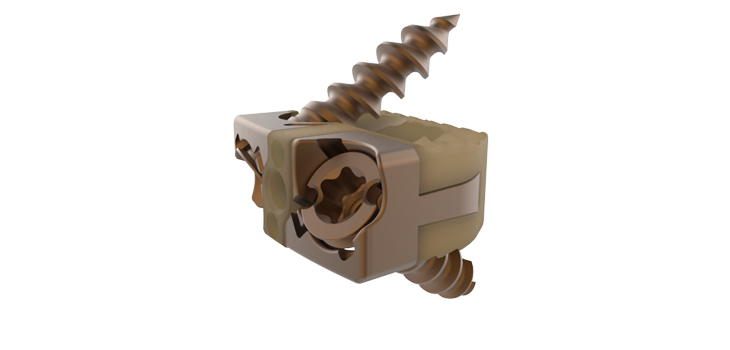
Knoxville, Tennessee-based ChoiceSpine, LP has received FDA 510(k) clearance to sell its Tomcat stand-alone cervical device.
ChoiceSpine’s Cervical System Cleared for Patients
1 min read Premium comments
Secondary
A December 21, 2015 announcement from the company said the new device, “molds the benefits and functionality of two other ChoiceSpine products, Stealth and Falcon, into one while it expands innovation as one of the first stand-alone cervical devices that uses PEEK-OPTIMA HA Enhanced.”
“To put it simply, ” said company co-principal Rick Henson, “this device provides one solution for multiple problems.”
The Tomcat is available in two versions, including a hybrid option. The hybrid version allows surgeons to address adjacent problems, like adjacent level disc disease. In addition, the adaptability of the device lends itself to a variety of unique specific surgeon preferences. The company claims the device, “is one of the industry’s first stand-alone devices made with PEEK-OPTIMA HA Enhanced. Hydroxyapatite (HA) has a chemical and crystal structure similar to that found in bone. This new material allows for early bone apposition and superior bone quality formation compared to PEEK-OPTIMA.”
ChoiceSpine was founded in 2006 when it acquired Orthotec. In February 2015, the company bought out Baxano Surgical Inc.’s VEO Lateral Access & Interbody System after Baxano declared bankruptcy. In August and September 2014, ChoiceSpine announced FDA 510(k) clearance for its Lancer pedicle screw system and the Thunderbolt minimally invasive pedicle screw system.
Company co-principal Marty Altshuler, said, “We’ve had an extremely busy and exciting year as we continue to grow and expand our product portfolio and look forward to what’s ahead in 2016.”
Author
React:
Discussion
This is a fascinating development. In my practice we've seen similar outcomes with the revised protocol. The key differentiator seems to be patient selection criteria. Has anyone else noticed the correlation with BMI thresholds?
Great point. I'd push back slightly on the conclusion, the sample size in the cited study is too small to draw population-level inferences. That said, the directional signal is compelling and worth a larger RCT.
We implemented a similar approach last year. Early results are promising but we're still gathering 12-month follow-up data. Happy to share our protocol if anyone is interested.
Join the conversation
Orthopedic professionals are discussing this. Sign in and upgrade to read every comment and add your voice.