
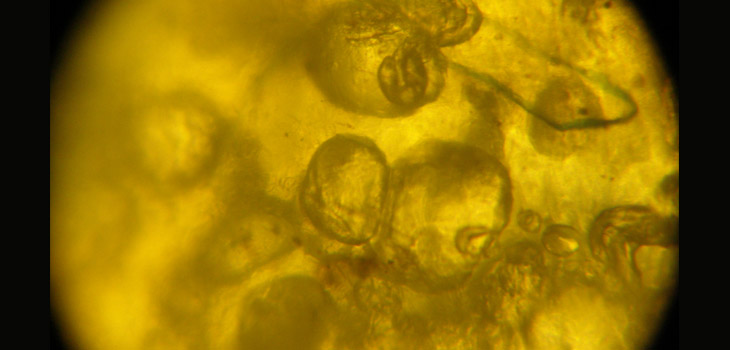
Researchers at Queen Mary University of London believe they have found new weapons with which to attack arthritis. They are microvesicles, tiny fluid-filled bubbles that are made by the body’s own cells. It turns out that the thick fluid that bathes the joints of arthritis sufferers is rich in microvesicles that appear to be battling the disease. British scientists are working to develop a bubble-based treatment that could ease the pain of arthritis and cut the need for hip replacements.
British Aim Blood Bubbles at Arthritis
1 min read Premium comments
Secondary
Microvesicles are packed with a protein called Annexin A1 that protects the cartilage that lines and cushions the joints from the ravages of arthritis. In experiments on arthritic mice, an injection of the microvesicles into the joints reduced cartilage damage. They also found that arthritis was worse in mice whose bodies made lower than usual levels of these microvesicles.
The researchers believe that the microvesicles are made by white blood cells that travel to arthritic joints in a bid to limit damage. Unfortunately they are not present in high enough numbers to stop the progression of the disease. If they could be extracted from the blood and injected back into the body in a concentrated form, they could be a powerful new treatment. It might even be possible to arm them with drugs to make them even more effective.
A writer for the journal Science Translational Medicine suggests that patients could go into the hospital as day cases, have blood taken and the microvesicles filtered out, and then injected back into the patient’s joints.
Author
React:
Discussion
This is a fascinating development. In my practice we've seen similar outcomes with the revised protocol. The key differentiator seems to be patient selection criteria. Has anyone else noticed the correlation with BMI thresholds?
Great point. I'd push back slightly on the conclusion, the sample size in the cited study is too small to draw population-level inferences. That said, the directional signal is compelling and worth a larger RCT.
We implemented a similar approach last year. Early results are promising but we're still gathering 12-month follow-up data. Happy to share our protocol if anyone is interested.
Join the conversation
Orthopedic professionals are discussing this. Sign in and upgrade to read every comment and add your voice.