
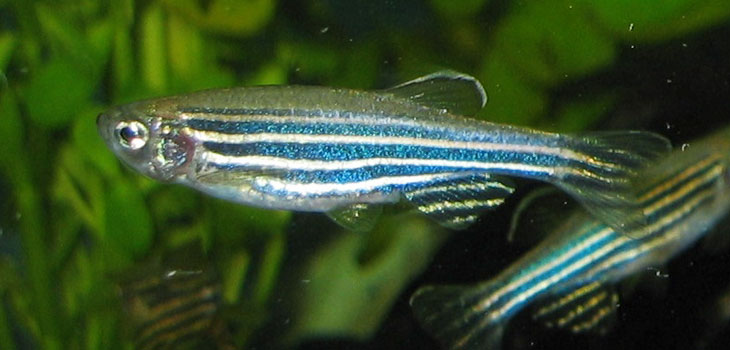
Research from Scotland has found that the mood-enhancing hormone called serotonin could play a role in recovering from a spinal cord injury—at least for zebrafish. According to the October 22, 2015 news release, “They have found that serotonin sends signals to stem cells found in the spinal cord to boost the growth of new motor neurons—nerve cells that are vital for controlling muscle activity and movement. The findings could help scientists to grow motor neurons in the laboratory that can be used in studies aimed at better understanding neurodegenerative conditions…Motor neuron disease is an untreatable condition caused by the progressive loss of motor neurons that control movement, speech and breathing.”
Zebrafish Aiding in Understanding of Spinal Cord Injury
1 min read Premium comments
Secondary
Thomas Becker, Ph.D. of the University of Edinburgh’s Centre for Neuroregeneration and the Euan MacDonald Centre for Motor Neuron Disease Research, said: “Understanding how zebrafish are able to repair damaged nerves could one day help us to trigger similar mechanisms in human stem cells. Our hope is that this may eventually lead to new treatments for conditions such as motor neuron disease, for which there is no cure.”
Dr. Becker told OTW, “Zebrafish, in contrast to mammals, regenerate their completely severed spinal cord to regain motor function. We want to know how a fish can achieve such amazing repair, to better understand why mammals are so notoriously bad at it. We find that zebrafish re-deploy signalling mechanisms that were active during embryonic development of the spinal cord to regenerate neurons and their connections after injury. Ultimately, this may inform strategies to overcome the lack of regeneration in mammals, including humans.”
Author
React:
Discussion
This is a fascinating development. In my practice we've seen similar outcomes with the revised protocol. The key differentiator seems to be patient selection criteria. Has anyone else noticed the correlation with BMI thresholds?
Great point. I'd push back slightly on the conclusion, the sample size in the cited study is too small to draw population-level inferences. That said, the directional signal is compelling and worth a larger RCT.
We implemented a similar approach last year. Early results are promising but we're still gathering 12-month follow-up data. Happy to share our protocol if anyone is interested.
Join the conversation
Orthopedic professionals are discussing this. Sign in and upgrade to read every comment and add your voice.