
Researchers, led by scientists at the University of California Los Angeles (UCLA), have found that wrist fractures may also predict more serious fractures in other parts of the body later in life. The study, published in the November issue of the Journal of Bone and Mineral Research, found that one in five women who had suffered a broken wrist eventually had a non-wrist fracture during the next 10 years. The study also suggests that women who broke a wrist stood a 40% higher chance of breaking other bones during the subsequent 11 years compared with women who did not break a wrist. The study was led by Carolyn Crandall, M.D., a professor of medicine in the division of general internal medicine and health services research at the David Geffen School of Medicine at UCLA
Wrist Fractures Predict Non-Wrist Fractures!
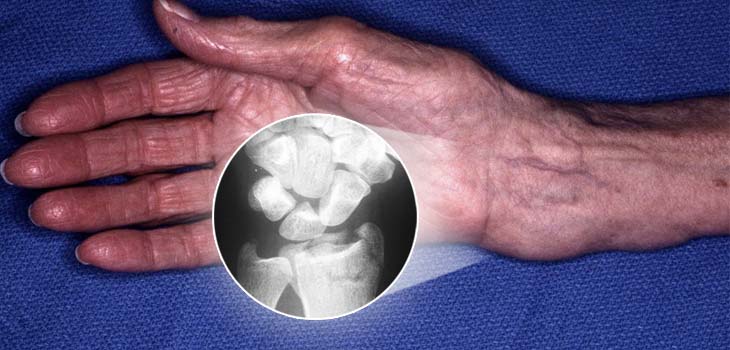
According to the November 10, 2015 news release, “The researchers used information from the Women’s Health Initiative (WHI), whose participants were aged 50 to 79 at the start of the study in 1993. More than 160, 000 women answered annual questionnaires detailing the fractures they experienced during more than a decade of follow-ups, allowing the researchers to detect fracture trends among them. The researchers examined the types of non-wrist fractures the women experienced following their initial bone break.”
“They found that having a wrist fracture was associated with a 50% higher risk of subsequent spine fractures, an 80% higher risk for upper arm fractures, a 90% higher risk of a lower arm non-wrist fracture, a 40% higher risk of leg fractures, and a 50% higher risk of hip fractures. These associations persisted even after adjusting for factors such as bone mineral density, physical activity, smoking and alcohol use, calcium and vitamin D intake, falls and all other known fracture risk factors. The researchers suggest that aberrations in bone structure or strength could be behind this increased fracture risk.”
Dr. Crandall told OTW, “Wrist fractures are the most common type of fracture in perimenopausal women. The U.S. Preventive Services Task Force (USPSTF) recommends bone density testing for women aged 65 and older. However, for younger women, bone density testing is only recommended if the predicted 10-year risk of major osteoporotic fracture is 9.3% or higher using the Fracture Risk Assessment Tool (FRAX). We wanted to know what proportion of the women aged 50-64 who actually experienced wrist fractures over 10 years of follow-up would have been identified for bone density testing under the USPSTF screening strategy.”
“We found out that the FRAX-predicted major osteoporotic fracture risk of 9.3% or higher identified only 17% of the women aged <65 years who subsequently experienced a wrist fracture! Although T-scores in the osteoporotic range were associated with increased wrist fracture risk, women with bone density T-scores between -1.0 and -2.5 were also at increased risk of wrist fracture.”
“Following the USPSTF guidelines for bone density testing in women aged 50-64 will not identify most women who go on to experience wrist fracture. This is important because wrist fractures are the most common type of fracture in perimenopausal women, and wrist fractures are major risk factors for future fractures. Studies are needed to determine how best to identify women at risk of wrist fractures.”
Discussion
This is a fascinating development. In my practice we've seen similar outcomes with the revised protocol. The key differentiator seems to be patient selection criteria. Has anyone else noticed the correlation with BMI thresholds?
Great point. I'd push back slightly on the conclusion, the sample size in the cited study is too small to draw population-level inferences. That said, the directional signal is compelling and worth a larger RCT.
We implemented a similar approach last year. Early results are promising but we're still gathering 12-month follow-up data. Happy to share our protocol if anyone is interested.
Join the conversation
Orthopedic professionals are discussing this. Sign in and upgrade to read every comment and add your voice.