
Researchers from Harvard have determined that even in the absence of a “bull’s eye” looking rash, spontaneous knee effusion (water on the knee) can be a primary symptom of Lyme disease. By conducting a literature review, published in The Journal of the American Academy of Orthopaedic Surgeons (JAAOS), the team found that early diagnosis and antibiotic treatment can prevent the development of Lyme disease’s more severe symptoms.
Spontaneous Knee Effusion a Primary Symptom of Lyme Disease
2 min read Premium comments
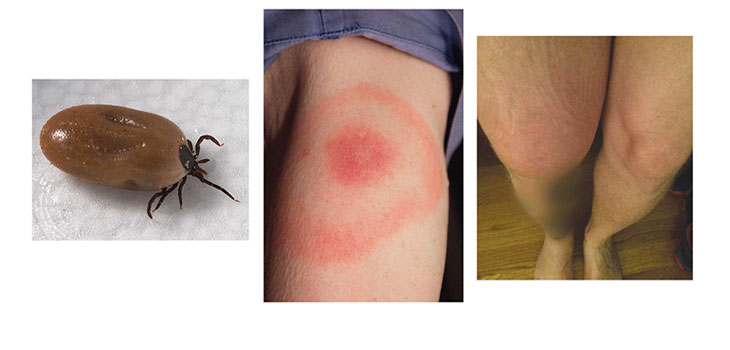
Secondary
“It is important to catch and treat Lyme disease early because the symptoms get progressively worse over time, ” said Elizabeth Matzkin, M.D., lead study author and assistant professor of orthopedic surgery at Harvard Medical School, in the November 1, 2015 news release. “However, the lab tests used to diagnose Lyme disease can take time to process, and there are certain circumstances in which immediate antibiotic treatment may be recommended before the lab results are complete.”
As indicated in the news release, “If symptoms have been present for less than two weeks, the Lyme test may need to be repeated as the test can remain negative the first two weeks of an infection. The current standard of care for the diagnosis of Lyme disease is a two-tier blood test. Antibiotic treatments are successful in 99 percent of patients who are diagnosed early and in 90 percent of patients who are diagnosed later. If left untreated, 60 percent of patients eventually develop Lyme arthritis, with the most severe cases having higher risks of permanent joint damage.”
“Half of patients do not recall a tick bite or observe a rash, and early symptoms are not always detected when a physician diagnoses a knee effusion, ” said Dr. Matzkin. “One of the most notable differentiating factors is, while septic or arthritic knees usually come with significant pain, knee effusions caused by Lyme disease are often very large, not activity-related, and mostly pain-free.”
Dr. Matzkin told OTW, “The purpose of this review article was to bring awareness of Lyme disease to the orthopedic community. If treating a patient for a spontaneous knee effusion, Lyme disease should be considered as part of the differential diagnosis, especially in areas with a known high prevalence of Lyme. Early diagnosis and treatment with antibiotics (usually Doxycycline) will result in resolution of symptoms and Lyme disease 99% of the time. Delayed diagnosis is associated with increased duration and severity of symptoms.”
Commenting on the research process, Dr. Matzkin noted, “A search of all currently and available literature was performed using an academic database and including Pubmed and Google Scholar. Search terms included Lyme disease and knee effusion. A hand search of the reference lists of the initially reviewed articles was also performed.”
React:
Discussion
This is a fascinating development. In my practice we've seen similar outcomes with the revised protocol. The key differentiator seems to be patient selection criteria. Has anyone else noticed the correlation with BMI thresholds?
Great point. I'd push back slightly on the conclusion, the sample size in the cited study is too small to draw population-level inferences. That said, the directional signal is compelling and worth a larger RCT.
We implemented a similar approach last year. Early results are promising but we're still gathering 12-month follow-up data. Happy to share our protocol if anyone is interested.
Join the conversation
Orthopedic professionals are discussing this. Sign in and upgrade to read every comment and add your voice.