
Rothman Institute Growing Limbs…Well, Soon
Rothman Institute Working on Limb Growth // Chris Bono, M.D. Details His Plans for NASS // and More!
5 min read Premium comments
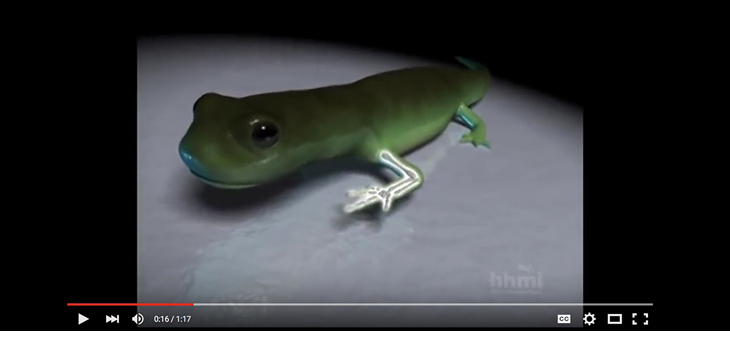
“Pioneering” doesn’t truly capture what they are doing at the Rothman Institute…you really have to see the salamander regeneration video. But first, we will get an introduction from Alexander Vaccaro, M.D., Ph.D., M.B.A. Dr. Vaccaro, the Richard H. Rothman Professor and Chairman in the Department of Orthopaedic Surgery at the Philadelphia-based institution, tells OTW, “We are thrilled to be introducing plasma medicine, a combination of physics, life sciences, and clinical medicine, to the orthopaedic arena. Theresa Freeman, Ph.D., an associate professor of orthopaedics at the Sidney Kimmel Medical Center at Thomas Jefferson University, is heading up our efforts to use the new technology of cold plasma to promote limb growth after amputation. While this is a natural ability in the salamander, we eventually want to be able to—for example—take someone who has had a finger amputated and re-grow that digit.”
“To that eventual end, we are using plasma medicine—the therapeutic application of a cold “non-thermal” atmospheric dielectric barrier discharge—to enhance cell differentiation and stimulate cartilaginous tissue regrowth. Plasma (ionized gas) generates free radicals and ions along with an electric field, which when applied to cells induce intracellular reactive species to stimulate bioelectrical and chemical signaling within the cells, thus stimulating tissue regeneration and healing. We are also studying how cold plasma treatment can be used in combination with inhibitors of proteins like, apoptosis signal-regulating kinase (ASK1), which works by decreasing inflammation and cell death after injury. Together, plasma treatment and ASK1 inhibition promotes robust repair and healing by reducing tissue destruction and stimulating endogenous stem cells to activate the regeneration signal cascade. ”
“In the salamander model it takes roughly 90 days to regrow a limb. During that time, undifferentiated cells that come from skin, muscle and cartilage have a memory of what they used to be and can come together to create a new, fully functioning limb. One day, we should be able to use the power of our cells to do the same for human beings.”
Chris Bono, M.D. Gives Details on Plans for NASS
What’s the big idea at NASS? Actually, says Christopher M. Bono, M.D., the new president of the North American Spine Society (NASS), there are three. Dr. Bono, chief of Spine at Brigham and Women’s Hospital, tells OTW about the plans for his presidential year. “Our pilot registry is already underway, with just over 100 patients enrolled. Dan Resnick and Zo Ghogawala are overseeing this multidisciplinary effort, something which will be a real service to NASS members because everyone must collect outcome data in order to be compliant with the new government mandate. By measuring and collecting this data we will have a substantial amount of valuable information and can start looking at outcomes on a national basis so that we can make our case with the insurers. At present, we have only five or six sites because the registry is considered to be research and it takes awhile to move through the Institutional Review Board process. Over the next year—if we continue at the same rate—then we should have 2, 000-3, 000 patients enrolled.”
“The other organization-wide effort involves developing more coverage recommendation for different procedures. We have already completed some updates on things like cervical disc replacement, and we are currently trying to get more insurance companies to make use of the recommendations. Thus far, we are getting no resistance from them. They say, ‘We reserve the right to develop our own coverage policies.’ I have heard, however, that the NASS coverage recommendations are being referenced quite a bit. I’ve been told that in at least one state an insurer has cut and pasted NASS coverage guidelines for percutaneous SI joint fusion.”
“Regarding the third project—the NASS Foundation—we are off to a healthy start in the fundraising department because of the dynamic Mike Reed. Mike, the executive director, has raised $330, 000 and in doing so has exceeded the benchmark that was set for him; his goal this year is $2 million. In making his case, Mike highlights the fact that spine-related injuries are the number one cause of disability worldwide. While there are many other important disorders that receive a lot of attention in the media, the most significant source of disability around the world involves the spine. We plan to submit a proposal to Congress named ‘10 by 25.’ Our objective is that the NASS foundation will decrease spine-related disability by 10% as of 2025. The end goals are that the foundation will be able to sustain research grants over the years and direct the kind of research undertaken.”
Dr. Bono adds, “I have enjoyed serving on several NASS committees through the years. Now I will look at the organization from a different vantage point, one that will inform my decisions as I work with the Board of Directors to lead the organization into a new era of innovative and lasting programs.”
Christopher A. Jarrett, M.D. Receives Hugh C. McLeod Award of Excellence
OrthoAtlanta physician, Christopher A. Jarrett, M.D., has been honored by the Arthritis Foundation for exemplifying the life and legacy of Dr. Hugh C. McLeod, III, a champion for arthritis awareness and treatment and an arthritis sufferer himself.
Nominations for the award, which was established by the Arthritis Foundation in 2012, are reviewed by a panel of medical professionals across Georgia. The award is bestowed upon a physician exhibiting Dr. McLeod’s spirit and qualities and who will continue to influence others to follow in his footsteps in the recognition and treatment of arthritis. Dr. Jarrett is the fourth recipient of this prestigious award since its inception in 2012.
Dr. Jarrett practices at the OrthoAtlanta Piedmont office and is affiliated with Piedmont Atlanta Hospital. He specializes in adult reconstruction and complex joint replacement of the hip, knee and shoulder. Dr. Jarrett, born in Sierra Leone, Western Africa and raised in Mississippi, is fellowship trained and board certified by the American Board of Orthopaedic Surgery. He obtained his undergraduate degree from Georgia Institute of Technology, and his Doctorate of Medicine from the University of Mississippi. He completed his residency in Orthopaedic Surgery at the University of South Alabama Medical Center in Mobile and a fellowship in Adult Reconstruction at Lenox Hill Hospital in New York City.
Dr. Jarrett told OTW, “Receiving this award means the world to me. Its purpose is to recognize those who give to their patients, the Arthritis Foundation, and the greater community of those who suffer from this disease. I am especially honored because I’ve always quietly plugged along just happy to be doing my job, and it’s a great feeling to know or find out that others are noticing and appreciating what you do.”
When asked about the most exciting things within the realm of arthritis research and/or treatment, Dr. Jarrett commented, “I’m really excited about two things. First, I like the idea of stem cell research and disease-modifying agents that can slow or halt the progression of arthritis. In the meantime, while we are waiting, I’m really enamored with the advances in pain control and enhanced or rapid recovery for those who do require surgical solutions.”
React:
Discussion
This is a fascinating development. In my practice we've seen similar outcomes with the revised protocol. The key differentiator seems to be patient selection criteria. Has anyone else noticed the correlation with BMI thresholds?
Great point. I'd push back slightly on the conclusion, the sample size in the cited study is too small to draw population-level inferences. That said, the directional signal is compelling and worth a larger RCT.
We implemented a similar approach last year. Early results are promising but we're still gathering 12-month follow-up data. Happy to share our protocol if anyone is interested.
Join the conversation
Orthopedic professionals are discussing this. Sign in and upgrade to read every comment and add your voice.