
Up until now, doctors aiming to save a limb have had a small window of around four hours to reattach the severed limb. There is a new device, however, that extends that window up to 12 hours. Bohdan Pomahac, M.D., director of plastic surgery transplantation and the burn center at Brigham and Women’s Hospital, is the developer of the portable device.
Revolutionary New Device Saves Limbs!
2 min read Premium comments
Secondary
Dr. Pomahac told OTW, “The needs of our patients and of surgeons led to this work. We want to be able to provide the care in a longer window of time than currently possible.”
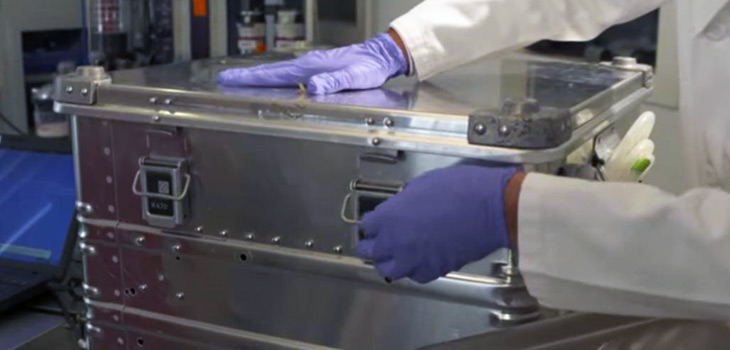
Asked to describe the device, Dr. Pomahac noted, “The entire machine is a box of a size of two stacked briefcases. It contains multiple components housed inside that include a pump, set of filters, oxygenator, and sensors. The limb rests above these components on a tray. We have an inflow cannula that is inserted into the artery. Fluid (perfusion solution) is gently pumped through the limb. Because there are too many draining veins, we simply collect the fluid in a tray and run it through a system of filters. The fluid then gets oxygenated, and recirculated. Sensors will alert us about any concerns related to abnormal physiology, such as low oxygen levels for example. This allows for hours of run without the complexity of blood, or constant inflow of new fluid, and makes it fully portable. The perfusion solution is titrated to a similar composition of an intracellular fluid.”
Asked about the development process, Dr. Pomahac told OTW, “We anticipated that we could stretch the time of ischemia with our machine, perhaps double it. We therefore picked a time that we thought was out of reach (12h) and were prepared to cut back. To our surprise, the limbs reattached following 12h[ours] on the perfusion system were in better shape than the limbs stored according to the current standard of care—4h[ours] on ice, and reattached. We still don’t know how much longer we may be able to keep limbs alive, but that’s where our funding comes that will help us answer this question.”
As for how the machine will be used in a domestic emergency, he added, “The stress of mass casualty situations cause serious strain on resources. Surgical teams get overwhelmed, and limbs can’t be re-attached because time is running out. We hope that our system will allow more time for transport of a patient to a major medical center where replantation is feasible, allowing surgeons to perform complex operations sequentially.”
“Collaboration of orthopaedic trauma with plastic and reconstructive surgeons is critical for good patient outcomes. We cherish the relationship we have here, and I would encourage everyone to do the same. Patients do better!”
React:
Discussion
This is a fascinating development. In my practice we've seen similar outcomes with the revised protocol. The key differentiator seems to be patient selection criteria. Has anyone else noticed the correlation with BMI thresholds?
Great point. I'd push back slightly on the conclusion, the sample size in the cited study is too small to draw population-level inferences. That said, the directional signal is compelling and worth a larger RCT.
We implemented a similar approach last year. Early results are promising but we're still gathering 12-month follow-up data. Happy to share our protocol if anyone is interested.
Join the conversation
Orthopedic professionals are discussing this. Sign in and upgrade to read every comment and add your voice.