
Studies are underway to determine if a new modular partial wrist replacement will allow for better movement and last longer than traditional implants for people seeking relief from painful wrist arthritis. Although current options such as total wrist replacement and wrist fusion can alleviate pain, patients are often limited in performing certain activities after surgery.
HSS, Extremity Medical, Pair Up For New Modular Partial Wrist Replacement
4 min read Premium comments
Secondary
“Wrist arthritis is one of the most common and debilitating conditions treated by hand surgeons, ” explained Scott Wolfe, M.D., the hand and upper extremity surgeon at Hospital for Special Surgery who developed the new device, in the October 26, 2015 news release. “When conservative treatments fail to provide relief, patients often consider surgery. Because of the limitations of current surgical options, we set out to develop a better wrist replacement based on years of research into how the wrist moves.”
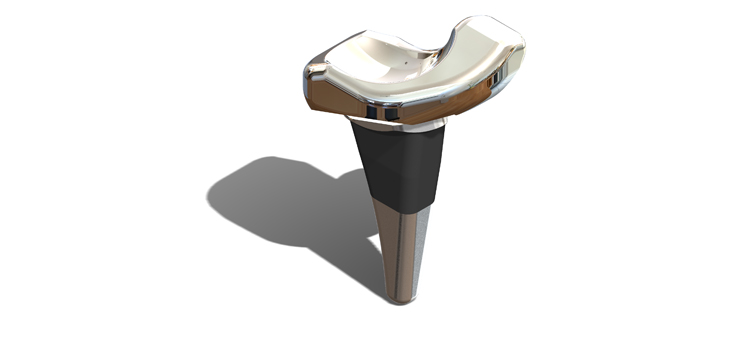
Dr. Wolfe and colleagues, along with Extremity Medical, have designed the modular partial wrist replacement to be a better anatomical match for a normal wrist and thus preserve the wrist motion needed for a range of activities.
Seven surgeons from Canada, Europe, and Australia were trained in using the innovative device at the September meeting of the American Society for Surgery of the Hand in Seattle. They will follow patients and record results in an international wrist replacement registry to determine how they fare with the new prosthesis.
The new modular implant is the culmination of more than a decade of research funded by the National Institutes of Health (NIH) to understand how the wrist works. Dr. Wolfe and his longtime colleague, Joseph J. Crisco, III, Ph.D., of Brown University School of Medicine and Rhode Island Hospital, launched the NIH-funded studies to elucidate the underlying mechanisms of wrist movement.
The wrist is highly complex, with more than a dozen individual joints formed by eight small bones that collectively make up the wrist. It was previously believed that the wrist moved the hand in two different planes—up and down or side to side. The research by Drs. Wolfe and Crisco demonstrated that during many activities, such as throwing a ball, hammering a nail or pouring a glass of water, the wrist doesn’t move in just one of these directions. It accomplishes the action by combining movements in both planes.
“Traditional wrist surgeries often constrain the wrist to move in one plane at a time, ” said Dr. Wolfe. “Because of this, patients need to learn new ways to move their forearm and arm to compensate for the change. In so doing, they may further stress other joints; conversely, those with impaired neighboring joints may not be able to return to some activities, like playing tennis or golf.”
Standard wrist replacements have also sustained a high failure rate because of the increased loads on the implant-bone interface due to these motion constraints, which leads to loosening and mechanical failure.
Surgery with Dr. Wolfe’s novel implant, called a wrist hemiarthroplasty, replaces the proximal carpal row of bones at the base on the hand, those usually affected in patients with wrist arthritis. The implant utilizes modular components in various sizes to match a patient’s individual anatomy and more closely mimic normal wrist motion.
The researchers believe the improved motion will enable patients to resume sports and other activities that they enjoy. They also believe studies will show the implant to be more durable than traditional wrist replacements, which only last 5 to 10 years.
The modular nature of the device will also allow the partial wrist replacement to be more easily converted to a novel “midcarpal” total wrist replacement if needed down the road, according to Dr. Wolfe.
The device, known as the KinematX midcarpal modular wrist hemiarthroplasty, has been licensed to Extremity Medical, LLC, a privately funded company in New Jersey that specializes in unique devices for the hand and foot. The company will be responsible for the manufacture and distribution of the new implant.
Dr. Wolfe told OTW, “By far the most exciting and memorable moment of my research career was our discovery that the proximal carpal row stood still during the dart-thrower’s motion, from radial extension to ulnar flexion. That finding was a pivotal moment and created the opportunity to design a wrist that would utilize the design of the midcarpal joint to simultaneously allow coupled joint motion and decrease the moment arm on the distal component of a wrist prosthesis. The next most important moment was our idea that a midcarpal hemiarthroplasty could function with an intact distal carpal row, and provide a better solution for SLAC (Scaphoid Lunate Advanced Collapse) arthritis. Finally, it is intensely satisfying to know our first wrist KinematX patient plays golf regularly in Britain four years after implantation with a DASH (Disabilities of the Arm, Shoulder, and Hand) score of zero!”
A company representative told OTW, “Extremity Medical intends to release the KinematX Modular Hemi Wrist System to several international surgical facilities in the EU and Australia in early December 2015. Patient follow-up results from these procedures will be recorded by the surgeons in an international wrist replacement registry to determine patient outcomes with the new prosthesis. Extremity Medical will look to expand the commercial release of the KinematX System to its 25 international markets once this early clinical evaluation is completed.”
The device is not yet FDA-approved.
React:
Discussion
This is a fascinating development. In my practice we've seen similar outcomes with the revised protocol. The key differentiator seems to be patient selection criteria. Has anyone else noticed the correlation with BMI thresholds?
Great point. I'd push back slightly on the conclusion, the sample size in the cited study is too small to draw population-level inferences. That said, the directional signal is compelling and worth a larger RCT.
We implemented a similar approach last year. Early results are promising but we're still gathering 12-month follow-up data. Happy to share our protocol if anyone is interested.
Join the conversation
Orthopedic professionals are discussing this. Sign in and upgrade to read every comment and add your voice.