
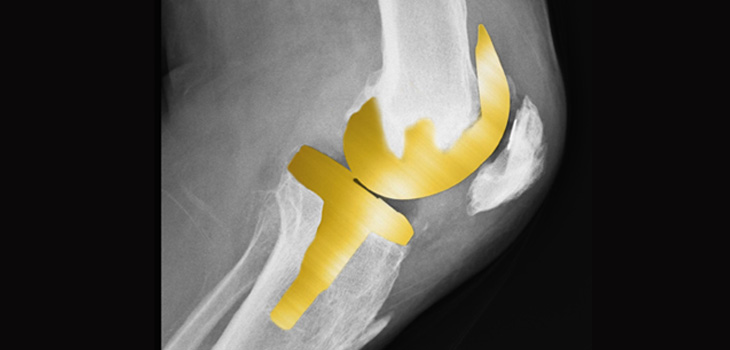
In a rare surgery performed in Jaipur, India, a 65-year-old man was successfully transplanted with a “golden” knee implant at a private hospital. The patient was suffering from acute osteoarthritis. Routine implants are made of cobalt, chromium and nickel, which in certain patients can cause infection or allergy.
Gold Knee Implanted in India Patient
1 min read Premium comments
Secondary
Doctors replaced Munish Joshi’s knee with an implant made of seven layers of zirconium, which is close to gold and looks like the yellow metal.
Due to uncontrolled diabetes, Mr. Joshi’s body had rejected other implants which caused him acute infection and allergy. According to the surgeon, Dr. Jhurani, the problem was solved with the ‘golden knee’ replacement. Jhurani added that there is a 70% reduction in oxidation in the implant as compared to traditional implants, which contributes to slower ageing of the joint and device.
Gold, in fact, has a long history as a medical implant and is part of a class of rheumatoid arthritis (RA) drugs known as disease-modifying anti-rheumatic drugs (DMARDs) because it not only treats the symptoms of RA, like pain and swelling of the joints, but it can also prevent joint damage and disability. Gold also reduces the activity of the patient’s immune system so it should always be used with care.
Author
React:
Discussion
This is a fascinating development. In my practice we've seen similar outcomes with the revised protocol. The key differentiator seems to be patient selection criteria. Has anyone else noticed the correlation with BMI thresholds?
Great point. I'd push back slightly on the conclusion, the sample size in the cited study is too small to draw population-level inferences. That said, the directional signal is compelling and worth a larger RCT.
We implemented a similar approach last year. Early results are promising but we're still gathering 12-month follow-up data. Happy to share our protocol if anyone is interested.
Join the conversation
Orthopedic professionals are discussing this. Sign in and upgrade to read every comment and add your voice.