
It’s hard to kill a good idea. Even for the FDA.
Collagen Meniscus Implant Reaches U.S. Patients
2 min read Premium comments
Secondary
On November 12, 2015, Ivy Sports Medicine, LLC announced the first implantation of its Collagen Meniscus Implant (CMI) in the U.S. The surgery was performed by Wayne Gersoff, M.D. in Denver, Colorado.
Rescission Battle
Readers may remember that Ivy Sports was an institutional investor in Regen Biologics when the FDA rescinded ReGen’s approval of the company’s meniscus implant. That decision forced ReGen to declare bankruptcy, but Ivy Sports kept the product alive and continued with a suit against the FDA, arguing the rescission was unlawful and that the FDA should have followed the reclassification route if it wanted to reclassify the device.
A U.S. district court agreed with the FDA, but Ivy Sports appealed. Ivy Sports won the appeal on a 2-1 vote of the judges.
So the implant lives on and is finally reaching U.S. patients.
Collagen Meniscus Implant
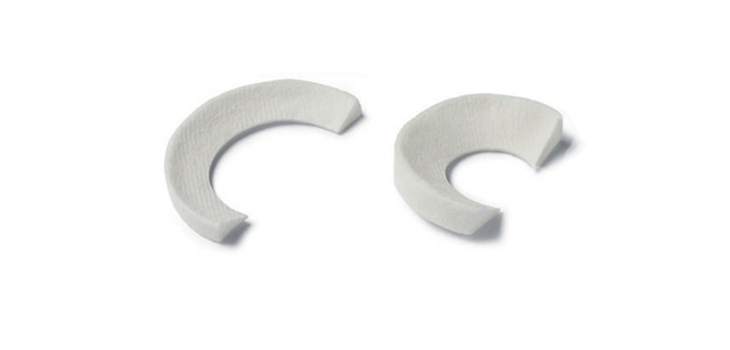
The implant is a biocompatible scaffold made of highly purified collagen that can be used to reinforce and repair a meniscus defect following partial meniscectomy or for irreparable meniscus tears. The implant has the general shape of the human meniscus and is trimmed by the surgeon to match the size of the meniscal defect. The implant is inserted via a minimally invasive procedure and sutured in place to the native meniscus.
Ivy Sports chairman and CEO Bob Pangia said he is seeing a shift in the medical community towards preserving the meniscus to prevent degenerative changes to the articular cartilage. “Approximately 20% of meniscal injuries result in a meniscus repair or meniscus transplantation, while 80% are treated via partial or total meniscectomies. Once a portion of the meniscus is removed, the articular cartilage can experience excessive stress which may lead to arthritic changes and the onset of osteoarthritis (OA). Due to the long-term degenerative nature of OA, patients may experience increased pain and reduced function. If the pain is too severe, patients may become candidates for a total knee replacement.” He added that the availability of the CMI in the U.S., offers physicians another option when faced with the difficult decision to repair or resect the meniscus.
The CMI, says the company, is the only collagen scaffold for repair and reinforcement of the meniscus that has been cleared for sale in the U.S. The implant has over 20 years of clinical experience in more than 6, 000 CMI cases worldwide and has been reported in 42 peer-reviewed publications.
The CMI was officially introduced to the U.S. market at the recently completed Arthroscopy Association of North America (AANA) Fall Course in Dallas Texas, on November 12-14, 2015.
Long live good ideas.
Author
React:
Discussion
This is a fascinating development. In my practice we've seen similar outcomes with the revised protocol. The key differentiator seems to be patient selection criteria. Has anyone else noticed the correlation with BMI thresholds?
Great point. I'd push back slightly on the conclusion, the sample size in the cited study is too small to draw population-level inferences. That said, the directional signal is compelling and worth a larger RCT.
We implemented a similar approach last year. Early results are promising but we're still gathering 12-month follow-up data. Happy to share our protocol if anyone is interested.
Join the conversation
Orthopedic professionals are discussing this. Sign in and upgrade to read every comment and add your voice.