
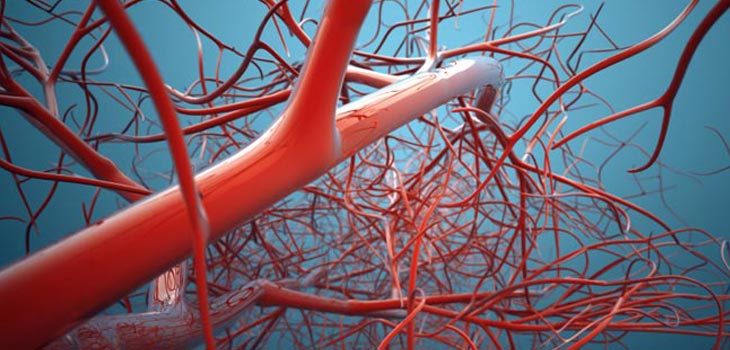
A Chinese biotechnological company announced it has developed the world’s first 3D blood vessel bio-printer which, it claims, makes it possible to produce personalized functional organs.
Chinese 3D Print Blood Vessels
1 min read Premium comments
Secondary
Sichuan Revotek Co., Ltd. based in Chengdu, capital of southwest China’s Sichuan Province, said the significant breakthrough has been achieved through its self-developed stem cell bio-ink technology, a 3D bio-printer and cloud computing platform.
“The creative breakthrough in the 3D blood vessel bio-printing means we have mastered the stem cell-based 3D bio-printing technology, ” said Yang Keng, chairman of Sichuan Languang Development Co., Ltd. Revotek is a subsidiary of Sichuan Languang.
Blood vessels that transport nutrients to organs are indispensable elements when creating any organs, according to James Keng, an expert who led the program.
Keng’s team has created a novel type of bio-ink called “Biosynsphere.” “We have successfully realized the blood vessel regeneration by relying on the 3D bio-printer, the biosynsphere technology and the data model based on cloud computing, ” Keng said.
Author
React:
Discussion
This is a fascinating development. In my practice we've seen similar outcomes with the revised protocol. The key differentiator seems to be patient selection criteria. Has anyone else noticed the correlation with BMI thresholds?
Great point. I'd push back slightly on the conclusion, the sample size in the cited study is too small to draw population-level inferences. That said, the directional signal is compelling and worth a larger RCT.
We implemented a similar approach last year. Early results are promising but we're still gathering 12-month follow-up data. Happy to share our protocol if anyone is interested.
Join the conversation
Orthopedic professionals are discussing this. Sign in and upgrade to read every comment and add your voice.