
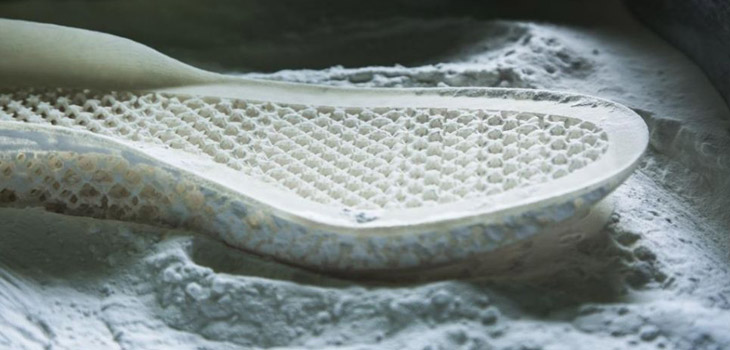
The next big thing for runners may be here—or almost here. It will have arrived for certain when adidas brings out its 3D printed custom insole for running shoes. The insole is the crucial part of the shoe that fits the bottom of the arch and supports the foot.
3D Printed Insoles Boon for Runners
1 min read Premium comments
Secondary
“Runners are just going to love this and eat it up!” says Lee Firestone, M.D., a podiatrist in Washington D.C. and Chevy Chase, Maryland, who also is a marathoner and running coach. He says the result is like taking a custom orthotic and building it right into the shoe. Someday you’ll go to the store to get your foot digitally measured. The data will be fed into the printer and out will come the perfect midsole for your foot.
Another group that will benefit from this innovation are people with bunion deformities or diabetics who need extra support in different areas of their feet.
Adidas has named the insole the Futurecraft 3D and indicated that additional plans will be announced in 2016.
Author
React:
Discussion
This is a fascinating development. In my practice we've seen similar outcomes with the revised protocol. The key differentiator seems to be patient selection criteria. Has anyone else noticed the correlation with BMI thresholds?
Great point. I'd push back slightly on the conclusion, the sample size in the cited study is too small to draw population-level inferences. That said, the directional signal is compelling and worth a larger RCT.
We implemented a similar approach last year. Early results are promising but we're still gathering 12-month follow-up data. Happy to share our protocol if anyone is interested.
Join the conversation
Orthopedic professionals are discussing this. Sign in and upgrade to read every comment and add your voice.