
Conventus Orthopaedics, Inc. will have lots more equity to grow with these days…the company has just finished a $23.5 million equity round of funding. All of the new financing comes from existing investors.
$23.5 Million to Conventus Orthopaedics
1 min read Premium comments
Secondary
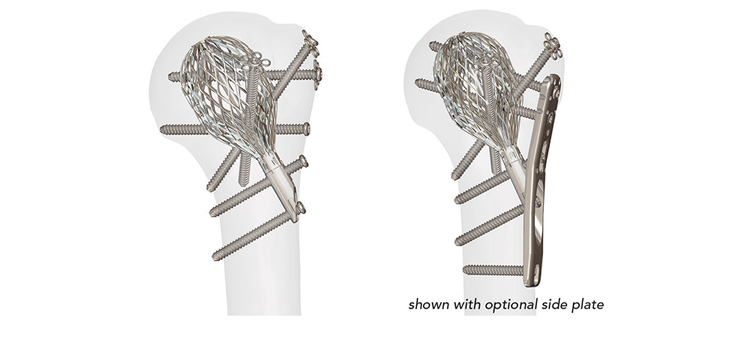
As indicated in the November 4, 2015 news release, “Conventus’ innovative 3-dimensional fracture management platform technology allows surgeons to achieve reliable 3D fixation in a less invasive manner for a variety of periarticular fractures throughout the body. Conventus will use the funding to support the commercial launch of the Conventus Cage, a FDA-cleared treatment for proximal humerus (PH), distal radius (DR), and proximal radius (PR) fracture repair. The Conventus Cage’s less invasive surgical technique and versatility enable secure fixation and stable 3-dimensional fracture repair where existing techniques have been shown to have limitations. The funding will also support R&D for new indications such as conditions in the lower extremity.”
Conventus Chief Executive Officer Paul Buckman said, “The fact that 100% of this equity funding came from current Conventus investors serves as validation that the Conventus Cage technology has the potential to alter fracture treatment worldwide. I greatly appreciate the continued support of our strong investor syndicate.”
Asked what surgeons are saying about the device, Buckman told OTW, “In our initial phase of commercialization that is currently underway, the feedback from the surgeons has been overwhelmingly positive. They quickly realize the potential advantages of our unique three dimensional scaffolding technology, and they have been pleasantly surprised at being able to utilize our device in the full range of proximal humerus fractures.”
Regarding how the equity will be used Buckman commented, “We plan to use this round of funding primarily for expanding our commercial efforts, developing additional indications, and doing clinical studies.”
Author
React:
Discussion
This is a fascinating development. In my practice we've seen similar outcomes with the revised protocol. The key differentiator seems to be patient selection criteria. Has anyone else noticed the correlation with BMI thresholds?
Great point. I'd push back slightly on the conclusion, the sample size in the cited study is too small to draw population-level inferences. That said, the directional signal is compelling and worth a larger RCT.
We implemented a similar approach last year. Early results are promising but we're still gathering 12-month follow-up data. Happy to share our protocol if anyone is interested.
Join the conversation
Orthopedic professionals are discussing this. Sign in and upgrade to read every comment and add your voice.