
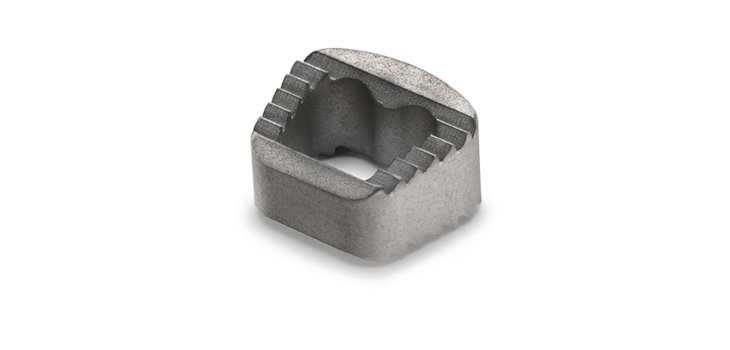
SeaSpine Holdings Corporation has announced the launch of its Cambria NanoMetalene cervical interbody body fusion device, an implant that is indicated for use as an adjunct to fusion in patients with degenerative disc disease (DDD).
SeaSpine Launches Cambria NanoMetalene Device
1 min read Premium comments
Secondary
According to the October 15, 2015 news release, “NanoMetalene is an ultra-thin layer of commercially pure titanium molecularly bonded to a PEEK-OPTIMA implant. It is applied in a proprietary high-energy, low-temperature surface process and encompasses the entire implant, including the center graft aperture.”
“Cambria NanoMetalene offers the benefits associated with traditional PEEK-OPTIMA devices such as a modulus of elasticity similar to bone and radiolucency for postoperative imaging, which allows surgeons to view the operative area and determine the extent of fusion of the vertebral bodies . With a molecularly bonded titanium surface on an uncompromised PEEK-OPTIMA implant2, SeaSpine provides customers an interbody solution offering the best of both materials.”
SeaSpine CEO Keith Valentine told OTW, “There were a number of technical hurdles to overcome when this patented and proprietary process was developed in collaboration with our technology partner: hurdles such as preparation of the PEEK implant for treatment, chamber design, consistency of surface application, and a reproducible finishing process. The result of this collaboration is a high quality, NanoMetalene application that is bonded to the PEEK at an atomic level using a low temperature, high energy process. Surface adhesion testing indicated that the bond strength between the titanium and PEEK surface exceeded that of the PEEK substrate itself. To further confirm the excellent bond strength of our ultra-thin titanium surface, we put our NanoMetalene products through extensive destructive testing, insertion/expulsion testing, as well as several other biomechanical tests. Our testing revealed no surface delamination, even under full plastic deformation of the devices. Additionally, our destructive testing confirmed that NanoMetalene does not alter the exceptional strength of the PEEK substrate. The NanoMetalene implants also retain the modulus advantages for bone as well as superior imaging characteristics compared to 100% titanium or titanium spray-on coated devices.”
Author
React:
Discussion
This is a fascinating development. In my practice we've seen similar outcomes with the revised protocol. The key differentiator seems to be patient selection criteria. Has anyone else noticed the correlation with BMI thresholds?
Great point. I'd push back slightly on the conclusion, the sample size in the cited study is too small to draw population-level inferences. That said, the directional signal is compelling and worth a larger RCT.
We implemented a similar approach last year. Early results are promising but we're still gathering 12-month follow-up data. Happy to share our protocol if anyone is interested.
Join the conversation
Orthopedic professionals are discussing this. Sign in and upgrade to read every comment and add your voice.