
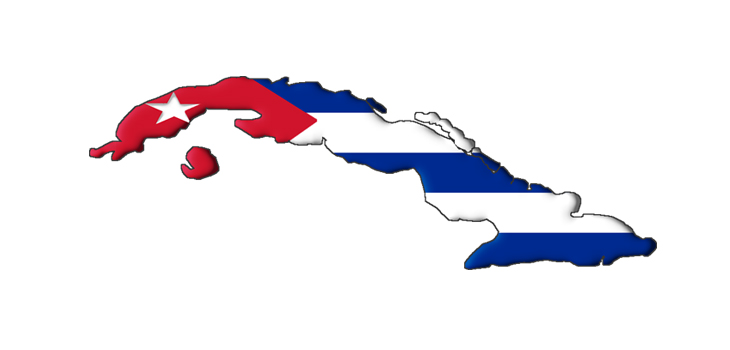
After an 11-year absence it is back to Cuba for Operation Walk, a Los Angelss based nonprofit that provides hip sand knee replacements in developing countries. For 20 years, Operation Walk provided total hip and knee replacement surgeries for free. Since 2004, politics made it impossible for the charitable organization to help Cubans.
Operation Walk Is Off to Cuba
1 min read Premium comments
Secondary
Now, according to Paul Guzzo of the Tampa Tribune, with the recent thaw in relations between the U.S. and Cuba a team of 70 U.S. medical professions will go to the island nation in November with the goal of performing as many as 50 surgeries. They will be led by surgeon Kenneth A. Gustke, M.D., a founding member of the Florida Orthopaedic Institute.
Gustke was part of Operation Walk’s last mission to Cuba in 2004 and looked forward to future trips there. But, as Guzzo wrote, the following year, the State Department denied the nonprofit’s request to visit the island nation. Said Operation Walk’s medical director Jeri Ward. “Every year we’d ask again and be turned down. We are happy we are going back. We are just people who want to help other people.”
Gustke, who has volunteered with Operation Walk since the early 2000s, said, “Some of these patients will not have arthritis like we see in the U.S. Due to lack of treatment for so many years, some have grossly deformed limbs and can barely get around even with a walker.”
All members of the U.S. team—the surgeons, nurses, physical therapists, anesthesiologists and every other medical professional needed to treat the patients from check-in to check-out are volunteers, according to Guzzo.
It is Operation Walk’s practice to take over an entire ward in hospitals that it visits. In the case of this visit to Cuba the organization will establish itself in the Centro de Investigaciones Médico Quirúrgicas (CIMEQ Hospital)in Havana.
“The amount of gratitude you get from people who would otherwise have zero access to this help is amazing, ” said Gustke.
Author
React:
Discussion
This is a fascinating development. In my practice we've seen similar outcomes with the revised protocol. The key differentiator seems to be patient selection criteria. Has anyone else noticed the correlation with BMI thresholds?
Great point. I'd push back slightly on the conclusion, the sample size in the cited study is too small to draw population-level inferences. That said, the directional signal is compelling and worth a larger RCT.
We implemented a similar approach last year. Early results are promising but we're still gathering 12-month follow-up data. Happy to share our protocol if anyone is interested.
Join the conversation
Orthopedic professionals are discussing this. Sign in and upgrade to read every comment and add your voice.