
Calling into question the standard thinking that training with heavy weights is necessary to build bone mineral density (BMD), researchers from Pennsylvania State University have found that low-weight, high-repetition resistance training does increase BMD in adults. The research, published in The Journal of Sports Medicine and Physical Fitness, indicated that participants who completed the study experienced up to 8% bone mineral density increases in the legs, pelvis, arms and spine. The researchers also found that postmenopausal women and osteopenic individuals would benefit most from a low-weight, high-repetition exercise regimen. The study was funded by Les Mills International, the creator of 13 global group fitness and team training programs.
Low-Weight Training DOES Increase BMD
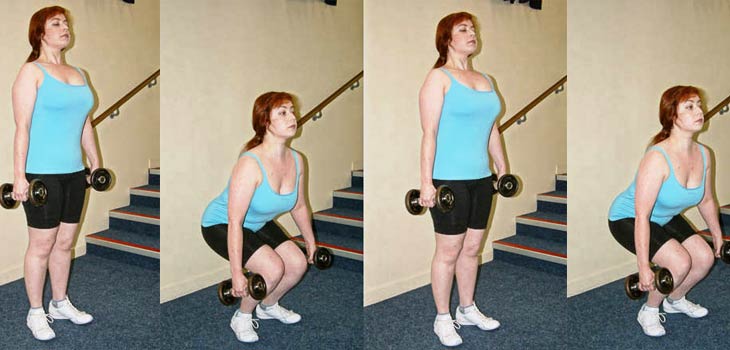
“These findings challenge the traditional thought that high-weight, low-repetition exercise is the ideal way to increase bone mineral density, ” said Jinger Gottschall, associate professor and lead researcher of the study conducted at Penn State, in the October 26, 2015 news release. “This is such a profound finding because low-weight, high-repetition exercise is easily attainable by anybody and everybody. This approach could help at-risk populations minimize the risk of osteoporosis.”
In the study, 20 untrained adults completed a 27-week group exercise program. Participants were assigned to one of two groups that either completed full-body weight-training workouts or workouts focused on building core muscles, in addition to cardiovascular workouts. The weight-training group completed two to three BODYPUMP classes per week. BODYPUMP is a low-weight, high-repetition resistance training program in which the participants used a bar and self-selected weights.
The team found a positive correlation between squat strength and pelvis bone mineral density, something the researchers think may decrease the risk of a hip fracture. In the study, people in the weight-training group experienced 25% greater increase in leg strength than those in the core group.
Dr. Gottschall told OTW, “Overall, the most surprising and encouraging aspect of the results was the magnitude of change we measured in bone density at multiple sites with low load, high repetition weight training. In addition, the correlation between leg strength and hip bone density was a novel finding. This singular detail can be extremely beneficial to persons with low bone density as well as older adults due to the tragic consequences of hip fracture due to falling. Our results are important for orthopedic surgeons in order to educate their patients on the benefits of low load, high repetition weight training to assist in the prevention of fractures.”
“My continued goal at The Pennsylvania State University and in collaboration with Les Mills International is to enhance and improve the current physical activity guidelines for specific populations. Together this research is a critical component of personalized medicine and how to develop an exercise program that is ideal for each individual.”
Discussion
This is a fascinating development. In my practice we've seen similar outcomes with the revised protocol. The key differentiator seems to be patient selection criteria. Has anyone else noticed the correlation with BMI thresholds?
Great point. I'd push back slightly on the conclusion, the sample size in the cited study is too small to draw population-level inferences. That said, the directional signal is compelling and worth a larger RCT.
We implemented a similar approach last year. Early results are promising but we're still gathering 12-month follow-up data. Happy to share our protocol if anyone is interested.
Join the conversation
Orthopedic professionals are discussing this. Sign in and upgrade to read every comment and add your voice.