
K2M Group Holdings, Inc. launched its Everest deformity spinal system at the Scoliosis Research Society’s (SRS) 50th Annual Meeting in Minneapolis the last week of September. It was the company’s fourth product introduction in its complex spine portfolio in the past year.
K2M Launches Everest at SRS’s 50th Annual Meeting
2 min read Premium comments
Secondary
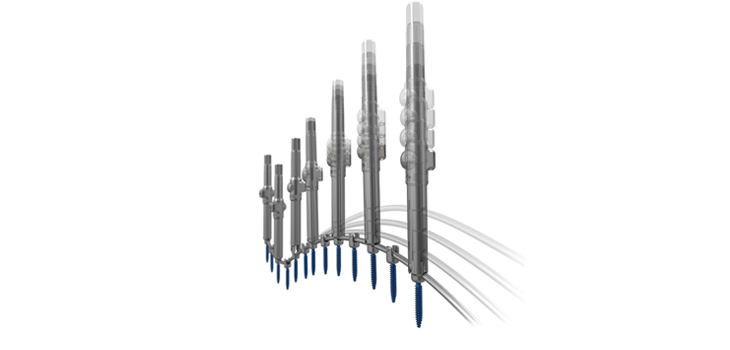
According to the company, the system allows for faster insertion and increased pullout strength. It also removes the need for reduction screws, offers segmental reduction of the rod, and provides intraoperative flexibility.
Featured in the system is a top-loading pedicle screw with a variety of screw types and accommodates titanium and cobalt chrome rods in two different diameters. The Basecamp Deformity Rod Reducer instrumentation provides surgeons with multiple options during surgery in one system with 60mm of quick or controlled rod reduction.
Shay Bess, M.D., chief of adult spinal deformity in the department of orthopedic surgery at the NYU Langone Medical Center’s Hospital for Joint Disease in New York, said the system “offers a streamlined and comprehensive approach and adapts to each surgeon’s preferred surgical technique, thereby allowing me to make the appropriate surgical decisions for my adolescent and adult patients.”
He specifically noted choices in rod diameter, rod material, construct configuration, and deformity correction techniques.
The system includes polyaxial and uniplanar screws, which feature a dual-lead thread pattern for faster insertion and increased pullout strength. The set screw features a modified square thread design that facilitates set screw introduction. The mixed-metal tulip minimized head splay and, according to the company, demonstrated improved biomechanical performance when tested against an all-titanium alloy screw.
Frank Schwab, M.D., spine service chief at the Hospital for Special Surgery in New York, said the speed and control Basecamp provides exceeds his expectations and gives him the ability to reduce the rod and correct the spine in a controlled fashion.”
Eric Major, the company’s president and CEO, said that along with Everest, the company has introduced the MESA 2 deformity spinal system, K2M’s flagship product for adolescent idiopathic scoliosis, the Nile alternative fixation spinal system, a low-profile band fixation technology, and the Capri corpectomy cage system, a trauma- and tumor-focused system offering new, unique intraoperative functionality.
Major said, “2015 has been a year of complex spine innovation for K2M.”
Author
React:
Discussion
This is a fascinating development. In my practice we've seen similar outcomes with the revised protocol. The key differentiator seems to be patient selection criteria. Has anyone else noticed the correlation with BMI thresholds?
Great point. I'd push back slightly on the conclusion, the sample size in the cited study is too small to draw population-level inferences. That said, the directional signal is compelling and worth a larger RCT.
We implemented a similar approach last year. Early results are promising but we're still gathering 12-month follow-up data. Happy to share our protocol if anyone is interested.
Join the conversation
Orthopedic professionals are discussing this. Sign in and upgrade to read every comment and add your voice.