
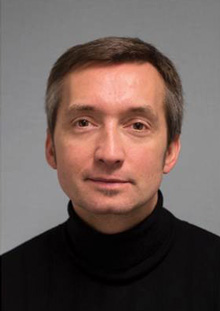
The spine world has lost some of its brilliance. Christoph Röder, M.D., Ph.D., M.P.H., director of the Institute for Evaluative Research in Medicine at the University of Bern in Switzerland and a senior researcher in Spine Tango, has passed away at the age of 44.
In Memoriam: Christoph Röder, M.D. Ph.D., M.P.H.
3 min read Premium comments
Remembrances
Dr. Röder is survived by his mother, Christel Röder, and brothers, Tobias and Michael Röder. The funeral took place September 2, 2015 in his hometown of Limburg, Germany.
For 13 years, Christoph Röder tirelessly led Spine Tango in an effort to ensure that reliable, comprehensive, and practice-changing data would be available to enhance spine care. Dr. Röder also spent time at the New York University Hospital for Joint Diseases, where he was a senior research fellow. Later, he was on the faculty at the University of Bern in Switzerland and then became the interim director and later the director of the Institute for Evaluative Research in Medicine at that facility.
Regarding Spine Tango, Dr. Röder was quoted as saying, “In the discussion about the rationale for spine registries, two basic questions have to be answered. The first one deals with the value of orthopaedic registries per se, considering them as observational studies and comparing the evidence they generate with that of randomized controlled trials. The second question asks if the need for registries in spine surgery is similar to that in the arthroplasty sector. The widely held view that randomized controlled trials are the ‘gold standard’ for evaluation and that observational methods have little or no value ignores the limitations of randomised trials. They may prove unnecessary, inappropriate, impossible, or inadequate. In addition, the external validity and hence the ability to make generalisations about the results of randomised trials is often low. Therefore, the false conflict between those who advocate randomised trials in all situations and those who believe observational data provide sufficient evidence needs to be replaced with mutual recognition of their complementary roles. The fact that many surgical techniques or technologies were introduced into the field of spine surgery without randomised trials or prospective cohort comparisons makes obvious an even increased need for spine registries compared to joint arthroplasty. An essential methodological prerequisite for a registry is a common terminology for reporting results and a sophisticated technology that networks all participants so that one central data pool is created and accessed.”
Zoher Ghogawala M.D. is chairman of the Department of Neurosurgery at Tufts University School of Medicine. He worked with Dr. Röder on many occasions. He stated, “Chris Röder was a pioneer and champion of spinal registries. He passionately built the Spine Tango platform and shared his experience freely with others. He was ahead of his time and believed that global registries would ultimately improve spinal care. We are all benefitting from his leadership in the arena.”
Emin Aghayev, M.D., a research associate and the Institute for Evaluative Research in Medicine at the University of Bern in Switzerland, knew Dr. Röder well. He said, “On one hand, he was an extremely dedicated, enthusiastic and motivated chief and colleague with a strong grip for any reasonable task, project and development. On the other hand, he was absolutely simple, down-to-earth, sensible guy, who almost always had time for his co-workers.”
“He made outcome research and development of medical registries his aim in life. One of his major projects was the international Spine Tango registry that has grown to over 85, 000 surgery forms and 220, 000 patient-based COMI forms from over 50 spine centers in 17 European and Non-European countries, and that has published about 45 peer-reviewed articles. One important point is that he dedicated his life to promoting registries in such medical domains as spine, where randomized controlled trials are very often not feasible.”
Eric Muehlbauer, executive director of the North American Spine Society, stated, “Chris was a good friend of mine and was a real joy to be around. He was a big fan of basketball player ‘Dr. J’ (Julius Erving) from the Philadelphia 76ers circa 1980. I gave him a Dr. J poster a long time ago that he loved. Since he was the director of Spine Tango, I would Call him ‘Dr. T, ’ and always ask him, ‘How goes the Tango?’ I last saw him in Germany last December at the German Spine Society meeting.”
“I would see him almost anytime I was in Europe and we would get together anytime he was here. He knew my wife and daughter too. Personally, I am heartbroken by his passing.”
React:
Discussion
This is a fascinating development. In my practice we've seen similar outcomes with the revised protocol. The key differentiator seems to be patient selection criteria. Has anyone else noticed the correlation with BMI thresholds?
Great point. I'd push back slightly on the conclusion, the sample size in the cited study is too small to draw population-level inferences. That said, the directional signal is compelling and worth a larger RCT.
We implemented a similar approach last year. Early results are promising but we're still gathering 12-month follow-up data. Happy to share our protocol if anyone is interested.
Join the conversation
Orthopedic professionals are discussing this. Sign in and upgrade to read every comment and add your voice.