
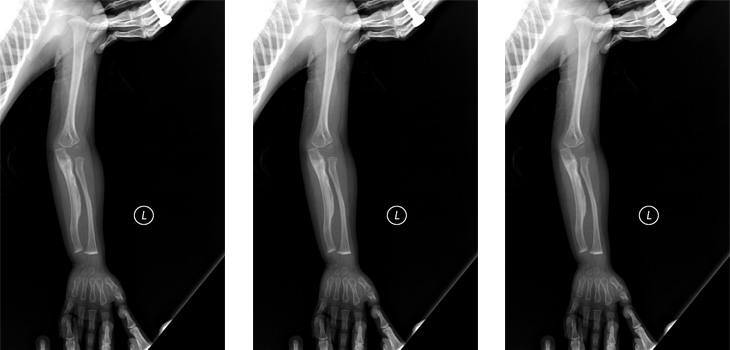
A bold new clinical trial will begin in January when doctors inject stem cells into fetuses in an attempt to ease the symptoms of osteogenesis imperfecta (brittle bone disease). The study will look at whether the stem cells, which are able to transform into a range of tissues, will moderate or cure the disease.
Bold Trial Targets Osteogenesis Imperfecta in Fetuses
2 min read Premium comments
Secondary
About one in every 25, 000 newborns is afflicted with brittle bone disease which is presently incurable. Scientists from Sweden’s Karolinska Institute and London’s Great Ormond Street Hospital are conducting the trial.
Errors in the developing baby’s DNA causes the disease which results in missing or poor quality collagen—the material that gives bones their structure. The scientists hope the donated stem cells will provide the proper instructions for the development of the baby’s bones.
The disease can be fatal for babies born with multiple bone fractures and those who survive face the risk of up to 15 fractures a year along with brittle teeth, impaired hearing and growth problems.
During the clinical trial, 15 babies still in the womb will get an infusion of stem cells. The study investigators hypothesize that the new cells will develop into bone, cartilage and healthy muscle tissue. The protocol for the study calls for infants to be infused again after they are born. A control group of 15 babies will have the treatment only after birth and the number of fractures will be compared with untreated patients.
“If we could reduce the fracture frequency, strengthen bones and improve growth, it would have a huge impact, ” Cecilia Gotherstrom, Ph.D., of the Karolinska Institute, told the BBC.
Doctors will administer the first infusion of stem cells to fetuses between weeks 20 and 34 of pregnancy.
Lyn Chitty, a pathologist at Great Ormond Street Hospital, told the BBC that genetic tests would be performed to target the flaws that cause the disease. “It is a serious disease. Our goal is to see if inside the womb the stem cell therapy can improve the condition and reduce the number of fractures.”
“It is the first trial and, if successful, it will pave the way for other pre-natal treatments when parents have no other option, ” Gotherstrom said.
Author
React:
Discussion
This is a fascinating development. In my practice we've seen similar outcomes with the revised protocol. The key differentiator seems to be patient selection criteria. Has anyone else noticed the correlation with BMI thresholds?
Great point. I'd push back slightly on the conclusion, the sample size in the cited study is too small to draw population-level inferences. That said, the directional signal is compelling and worth a larger RCT.
We implemented a similar approach last year. Early results are promising but we're still gathering 12-month follow-up data. Happy to share our protocol if anyone is interested.
Join the conversation
Orthopedic professionals are discussing this. Sign in and upgrade to read every comment and add your voice.